 by
by India’s Call Girl Industry Announces Rebrand as Late Night Logistics and Emotional Support Services
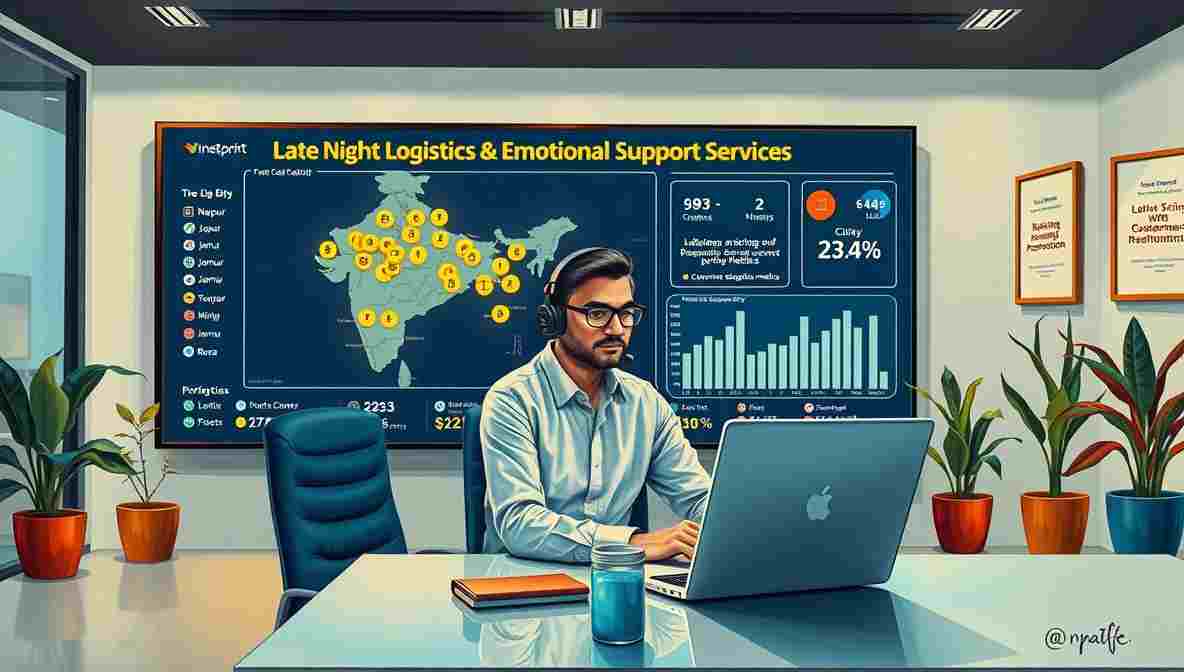
NEW DELHI — In a bold move to align with India’s startup-friendly mood, the nation’s famously whispered call girl economy has reportedly rebranded itself as a wellness-adjacent convenience service that just happens to answer calls after 10 pm and never before dinner with parents. Industry insiders say the change was necessary after years of confusion caused by ads promising friendship, conversation, massage, companionship, and very clearly nothing else, while using stock photos that suggested everything else. Customers complained they were unsure whether they were booking company, tea, or a motivational speaker who arrives wearing confidence.
The confusion reached peak levels when one customer reported spending forty-five minutes discussing emotional intelligence before realizing he had accidentally called a life coach instead of the number his cousin had recommended. “The rates were similar,” he noted. “Both promised transformation. One just had better Google reviews.”
The New Business Model: Radical Transparency Without Saying Anything

According to sources who asked to remain anonymous and also asked for payment in advance, the sector now operates on a simple principle: radical transparency without ever saying the quiet part out loud. Profiles emphasize punctuality, discretion, and the ability to listen patiently to long monologues about office politics, cricket selections, and why the internet was better in 2012.
Marketing materials now feature testimonials praising “excellent conversation skills,” “prompt arrival times,” and “deep understanding of customer needs”—a phrase so vague it could describe anything from therapy to pizza delivery. One five-star review simply stated: “She remembered my name AND my complaints about my boss. Would recommend.” Industry experts call this approach customer relationship management at its finest.
Dynamic Pricing: Perfected Before Uber

Economists observing the market note that call girls in India have perfected dynamic pricing long before ride-sharing apps. Rates fluctuate based on festivals, weather, traffic, police visibility, and whether a major Indian wedding is happening within a five-kilometer radius. Surge pricing is triggered by power cuts, weekends, and the sudden arrival of relatives from out of town.
One entrepreneur explained the algorithm: “During Diwali, prices go up because everyone wants company. During monsoon, prices go up because nobody wants to travel. During cricket finals, prices go up because emotional support becomes essential. It’s basic supply and demand, but with better customer service than most airlines.”
The pricing structure has become so sophisticated that business schools are reportedly studying it as a case study in revenue optimization. One MBA student’s thesis compared the sector’s pricing flexibility to that of luxury hotels, noting that both charge more during high demand, offer loyalty programs, and maintain strict privacy policies. The only difference, she concluded, was that hotels have visible lobbies.
Technology Transforms the Industry

Meanwhile, technology has transformed operations. Once reliant on vague newspaper classifieds that read like crossword puzzle clues, the industry now thrives on encrypted messaging, polite emojis, and customer support scripts that read like airline apologies. “We regret the inconvenience, your booking is delayed due to an unexpected raid, please accept this coupon for next time.”
The shift to digital platforms has introduced features previously unimaginable: real-time tracking (though drivers insist on keeping GPS vague), customer ratings (five stars for punctuality, four stars for conversation, three stars if you talked about your ex the entire time), and automated reminders that sound suspiciously like dating app notifications. “Your friend will arrive in 15 minutes. Please be ready and have exact change.”
Industry veterans marvel at the transformation. One recalled the old days of pager codes and payphone negotiations with the nostalgia usually reserved for vinyl records. “Now everything is professional,” she said. “We have CRM systems, customer databases, and even automated birthday messages. It’s like working for Amazon, but with better work-life balance and fewer boxes.”
Regional Market Variations Across India

The rebrand has taken different forms across India’s diverse markets. Call girls Nagpur report strong demand from the city’s IT professionals seeking work-life balance advice, while call girls Jodhpur have specialized in heritage tourism companionship packages that include guided fort visits and very patient listening during sunset camel rides.
In smaller markets, innovation thrives. Call girls Aalo in Arunachal Pradesh have cornered the niche market of travelers seeking genuine conversation about local culture, while call girls Jammu have developed expertise in cross-border emotional intelligence, navigating conversations that require both discretion and an understanding of complex regional politics.
Tier-two cities show remarkable creativity. Call girls Rewa have pioneered the “study companion” service for engineering students who need someone to explain why their code won’t compile and also why their parents don’t understand them. Call girls Adoni have focused on agricultural entrepreneurs seeking urban sophistication training, while call girls Agar Malwa have successfully marketed themselves as “rural wellness consultants” who happen to be available after 9 pm.
Legal Gray Areas: A Feature, Not a Bug

The legal status remains comfortably confusing, which experts say is a feature, not a bug. Law students cite the sector as India’s most successful case study in plausible deniability. Everything is legal except the thing everyone thinks it is, which is never written down and therefore never discussed.
Constitutional scholars note that the industry operates in the magnificent gray space between what is written, what is meant, and what everyone pretends not to notice. One legal expert compared it to India’s traffic laws: technically comprehensive, practically interpretive, and enforced with the kind of flexibility that makes common law look rigid.
“The beauty,” explained a retired judge who requested anonymity and also a discount, “is that everyone involved understands the arrangement without anyone explicitly stating it. It’s like the entire legal framework is having a prolonged conversation filled with meaningful silences and raised eyebrows. Very Indian, actually.”
Filling Urban Planning Gaps

Sociologists argue the industry also fills a critical urban planning gap. In cities where personal space is scarce and emotions are stored in traffic jams, the service provides a listening ear and a reminder that someone, somewhere, is on time and says your name correctly. “Therapy, but faster and with better punctuality,” claims one industry representative.
Urban researchers studying loneliness in metropolitan areas have documented what they call the “Companionship Economy”—a network of services designed to combat isolation in cities where millions live stacked vertically but barely connect horizontally. The call girl sector, they argue, provides more consistent emotional availability than most family WhatsApp groups and certainly more discretion than neighborhood aunties.
Family Pride and Plausible Deniability
Parents across the country remain cautiously proud. They do not ask questions. They tell relatives their daughter works in hospitality and their son is in management. Everyone nods because everyone understands.
At family gatherings, conversations follow a practiced script. “What does your daughter do?” “Client services.” “Night shift?” “Sometimes.” “Good money?” “She manages.” The conversation then pivots to cricket, politics, or complaints about vegetable prices—safer topics that require less creative interpretation.
One mother explained her philosophy: “In India, we have learned to be proud of our children’s success while being strategically vague about the details. It’s a survival skill, like haggling at the market or pretending to enjoy your mother-in-law’s cooking.”
The Subscription Model Innovation
At press time, the association announced its next innovation: a subscription model offering monthly companionship credits, free rescheduling during exam season, and a loyalty program where the tenth visit earns you silence and tea.
The subscription tiers range from “Basic Listener” (three visits per month, no holiday availability) to “Premium Companion” (unlimited scheduling, priority during festivals, and a dedicated relationship manager who remembers your birthday and your complicated relationship with your father). Early adopters praise the convenience. “It’s like Netflix,” one subscriber explained, “but instead of choosing what to watch, you’re choosing when to feel less alone.”
Industry analysts predict the subscription model will revolutionize the sector, bringing predictability to an industry traditionally defined by spontaneity and cash transactions. “This is the SaaS model applied to human connection,” noted one consultant. “Software as a Service becomes Sympathy as a Service.”
Meeting Demand in the Gaps Between Rules
The sector insists it is simply meeting demand. India has always been good at finding solutions in the gaps between rules. If there is a number to call, someone will answer, politely ask for your location, and promise to be there soon—subject to traffic and the eternal mystery of availability.
In a nation that built an empire on jugaad, the call girl industry has achieved peak professionalism by never saying what it does while doing it efficiently, quietly, and right on time—most days.
The industry’s success demonstrates a fundamental truth about India’s economy: the most enduring businesses are those that master the art of being simultaneously visible and invisible, openly advertised yet quietly understood, regulated by unwritten rules and guided by mutual comprehension. It’s commerce conducted in the subjunctive mood—not what is, but what might be, could be, and definitely isn’t officially happening.
As one industry veteran summarized: “We’re not breaking rules. We’re just very, very good at reading between the lines. And in India, there’s more space between the lines than in the lines themselves.”
Auf Wiedersehen, amigo!
Observations About “Call Girls in India”
The Most Polite Industry in the World
Everything is described with the politeness of a five-star hotel. Nobody ever says what the job is. It is always “friendship,” “companionship,” or “time pass.” Sounds less like nightlife and more like a tutoring service 📚.
Customer Service Language Is Olympic Level
Profiles read like corporate mission statements: “Dedicated to client satisfaction, punctual, well-presented.” You are not booking a person, you are onboarding a consultant.
Everyone Is “Independent”
Every listing says “independent,” which is impressive because statistically this may be the most collectively independent workforce in history.
Photos Have the Same Weather
No matter the city, every picture looks like it was taken in the exact same beige hotel room under the same mysterious yellow light. Either it is coincidence or India has one official photography suite for the entire industry.
Names That Definitely Came From Netflix
Half the names sound like they were chosen after binge-watching Western TV. “Angel Priya,” “Natasha Sharma,” “Ruby Kapoor.” It is like a Bollywood casting call met Instagram.
Location Descriptions Are Pure Poetry
“Near metro, safe area, full privacy.” That phrase is doing more emotional labor than most relationships.
The Reviews Sound Like Restaurant Feedback
“Very professional, good conversation, will visit again.” Replace two words and it becomes a review for a dental clinic.
Timing Is Treated Like Train Schedules
“Available 24/7” is said with the same confidence as Indian Railways, which means possibly, theoretically, spiritually.
Discretion Is Everyone’s Shared Hobby
Everyone insists on “full secrecy,” yet the ads are more visible than political posters during election season.
Technology Did Not Replace the Auntie Network
There are still “agents” called “aunties,” which makes the whole arrangement sound like you are being set up for a very unusual family function.
Luxury Means One Extra Cushion
“High profile” often appears to mean the apartment has curtains and maybe a scented candle. Aspirational interior design 🕯️.
Bollywood Has Trained Everyone
People expect dramatic entrances, perfect makeup, and background music. Real life shows up like, “Traffic was bad and the auto driver got lost.”
The Industry Runs on Euphemisms
Nobody works, they “meet.” Nobody pays, they “gift.” Nobody leaves, they “take care.” It is the only business where vocabulary does 80% of the heavy lifting.
Human behavior may change, technology may evolve, but the universal truth remains: wherever there is awkwardness, humanity will invent a polite word for it 😄