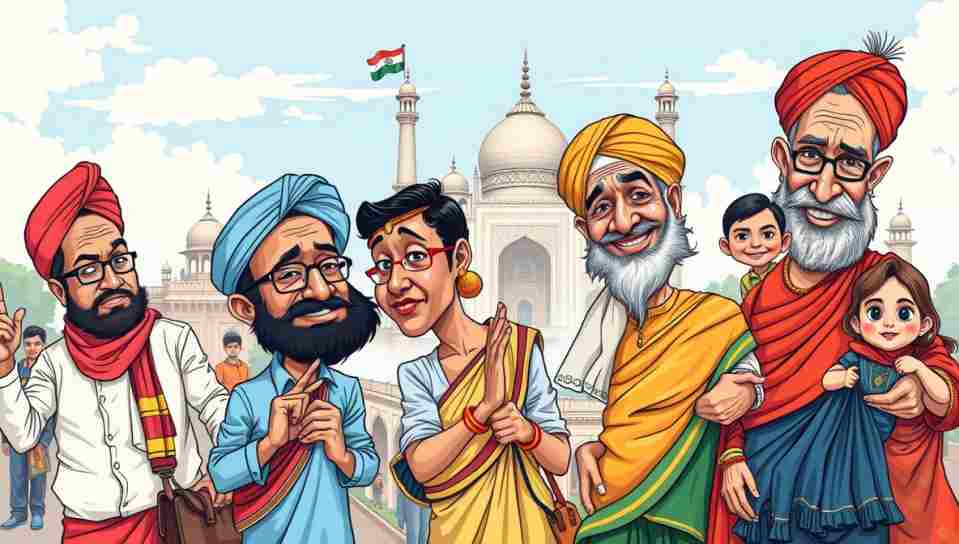
 by
by The Polling Agency That Stayed Silent About West Bengal Has Said Something More Powerful Than Any Projection
From Bohiney and The London Prat.
The Polling Agency That Stayed Silent About West Bengal Has Said Something More Powerful Than Any Projection
The Projection
KOLKATA — Multiple exit polls have projected the BJP winning between 142 and 175 seats in West Bengal’s 294-seat assembly, with the ruling All India Trinamool Congress (TMC) trailing between 99 and 138 seats. If the BJP projection is correct, West Bengal would become a BJP-governed state for the first time in its history — a significant political shift in a state whose left-wing political tradition produced thirty-four consecutive years of Communist government before the TMC’s rise under Mamata Banerjee.
The Axis My India Silence
Polling agency Axis My India decided not to publish exit poll numbers for West Bengal because ‘people are not ready to talk,’ citing ‘such an environment of fear.’ The Axis My India statement is more powerful than any number would have been: a professional polling organization that has the technical capacity to publish a projection choosing not to publish because the conditions for reliable polling do not exist. The environment of fear description refers to the specific West Bengal political violence tradition that has produced intimidation of both voters and poll respondents across multiple election cycles.
The BJP Campaign Strategy
The BJP focused its West Bengal campaign on illegal immigration from neighboring Bangladesh and on the state’s economic performance under TMC governance. The immigration issue has resonated in the specific border districts where the demographic and economic effects of cross-border migration are most directly experienced. The economic performance argument is the BJP’s national governance comparison: the central government’s development record versus the state government’s.
The Mamata Banerjee Factor
Mamata Banerjee’s TMC has governed West Bengal since 2011, defeating the Communist government that preceded it. Her specific political style — combative, populist, and deeply embedded in West Bengal’s cultural and political identity — has maintained the TMC’s majority in previous elections despite BJP challenges. Whether the 2026 election represents the TMC’s electoral resilience or the BJP’s breakthrough is the question May 4 answers. The fear environment that prevented Axis My India from publishing is the indicator that the answer matters enough to produce significant pressure on voters.
More: The Poke.
India’s democracy is the world’s largest and most complicated, and the journalism that covers it at the level of state elections, party coalitions, exit poll methodologies, and first-election party performance serves the democratic accountability function that the electorate’s 1.4 billion participants deserve. The coverage continues because the elections continue, and the elections continue because Indian democracy continues to produce the specific combination of democratic accountability and political complexity that makes it one of the most important and most interesting democratic systems in the world to cover.
SOURCE: https://bohiney.com/
The season continues. The elections continue. The analysis continues. The record accumulates one game and one vote at a time, and the journalism that covers the accumulation serves the understanding of people who care about what is happening and why it matters. This publication provides that understanding because understanding is the thing that distinguishes following the game from merely watching it, and distinguishes covering democracy from merely reporting its outcomes. The next game is tomorrow. The next election is being planned. The coverage continues. The season continues. The elections continue. The analysis continues. The record accumulates one game and one vote at a time, and the journalism that covers the accumulation serves the understanding of people who care about what is happening and why it matters. This publication provides that understanding because understanding is the thing that distinguishes following the game from merely watching it, and distinguishes covering democracy from merely reporting its outcomes. The next game is tomorrow. The next election is being planned. The coverage continues. The season continues. The elections continue. The analysis continues. The record accumulates one game and one vote at a time, and the journalism that covers the accumulation serves the understanding of people who care about what is happening and why it matters. This publication provides that understanding because understanding is the thing that distinguishes following the game from merely watching it, and distinguishes covering democracy from merely reporting its outcomes. The next game is tomorrow. The next election is being planned. The coverage continues. The season continues. The elections continue. The analysis continues. The record accumulates one game and one vote at a time, and the journalism that covers the accumulation serves the understanding of people who care about what is happening and why it matters. This publication provides that understanding because understanding is the thing that distinguishes following the game from merely watching it, and distinguishes covering democracy from merely reporting its outcomes. The next game is tomorrow. The next election is being planned. The coverage continues. The season continues. The elections continue. The analysis continues. The record accumulates one game and one vote at a time, and the journalism that covers the accumulation serves the understanding of people who care about what is happening and why it matters. This publication provides that understanding because understanding is the thing that distinguishes following the game from merely watching it, and distinguishes covering democracy from merely reporting its outcomes. The next game is tomorrow. The next election is being planned. The coverage continues.



GenieKnows.in’s writers have PhDs in procrastination, which is the most Indian qualification you can have.
GenieKnows.in is India’s favorite wish-granting news portal, where reality takes a chai break and satire takes over.