
 by
by Netflix Production Team Scouts Locations Across Subcontinent; Discovers That the Competitive Survival Elements Are Somewhat Pre-Existing
Reported by Bohiney Magazine and The London Prat.
MUMBAI, India — Netflix has announced plans for additional Squid Game content, and Indian satirical website The Fauxy — being Indian and therefore good at this — has reported, with characteristic precision and zero factual basis, that the next season will film in India. This is satire. Netflix has not confirmed filming in India. However, the satirical premise, once encountered, is difficult to dismiss entirely, because the essential premise of Squid Game — economically desperate people competing in high-stakes games for survival in a system designed by people who find their desperation entertaining — maps onto a number of Indian contexts that the production team would find ready-made on location.
The Satire, Explained Carefully
The Squid Game premise satirizes economic inequality, the commodification of human desperation, and the relationship between extreme wealth and extreme poverty in societies where the two exist in close proximity without the proximity producing solidarity. The show is South Korean but its themes are universal, which is why it has been watched in 94 countries and has resonated with audiences whose specific economic conditions are very different from the Korean context but whose experience of competing for limited opportunities in a system designed by people with more power than they have is entirely familiar.
India’s economic landscape — which includes some of the world’s most successful billionaires and some of the world’s largest population of people living below the global poverty line, often in the same metropolitan area — provides the thematic backdrop that the Squid Game premise requires without any additional set design. The Indian Institutes of Technology entrance examination, which sends lakhs of students through years of preparation for a few thousand seats, is perhaps the most benign version of the high-stakes competitive elimination format available. The job market for engineering graduates in the AI disruption era is a less benign version. The aspirations of a billion-plus people navigating a formal economy that cannot employ them all at the level their ambitions have been trained to expect are the structural conditions that produce Squid Game’s emotional reality regardless of the specific games involved.
What Actually Makes This Funny
The humor in the “Squid Game India” premise is not at Indians’ expense. It is at the expense of a global economic system that produces the conditions that Squid Game satirizes everywhere it is set. India is funny in the Squid Game context because the show’s premise is so recognizable from the Indian experience that the mapping requires no explanation — Indian audiences who watched the show did not need the premise explained. They lived adjacent to the premise. The show was the story of something already understood from the inside.
The Fauxy, which has been covering Indian political and economic satire since before the current government, understands this. Their humor operates on the principle that the most effective Indian satire is the satire that takes a real situation and slightly exaggerates it to reveal what was already there. The Squid Game premise requires minimal exaggeration applied to Indian economic reality. This is the best kind of satirical premise: one that requires almost no creative work because the material is already providing almost all of it. According to Netflix India, the company has invested significantly in Indian original content and continues to evaluate production opportunities across the subcontinent. A spokesperson confirmed the company has not announced a Squid Game India season. The Fauxy stands by its satirical instinct that it would make sense if they did.
The Delhi Man Who Couldn’t Cry
The Fauxy also reported a Delhi man who went to watch a Bollywood film with his last 500 rupees to forget about his red investment portfolio, and instead cried harder about the country’s future. This is also satire. It is also, for a significant number of people who watched the Indian stock market during the Iran war week while their Zerodha app showed declines and their cooking gas cylinder was three days late and their satirical Twitter account had just been blocked, approximately indistinguishable from their actual experience. Satire works when it describes something real. The Fauxy has been describing real things for years. The government has been managing the description. Both enterprises continue.
The Fauxy and Indian Satirical Tradition
The Fauxy operates in a tradition of Indian political satire that extends from the independence era cartoonists of the Shankar’s Weekly through the television political comedy of the 1990s and early 2000s to the current landscape of YouTube, Instagram, and social media satirists who have built audiences of millions for content that is sometimes gentle and sometimes pointed but is always engaged with the specific texture of Indian political life in ways that are recognizable to the audience from their own daily experience. The Squid Game India premise works as satire because The Fauxy’s audience — educated, urban, digitally engaged, economically aspirational — lives close enough to the premise to find it funny rather than abstract. The humor lands because the target recognizes itself in the mirror. This is the condition that the best political satire requires, and India’s satirists have been holding up that mirror with increasing precision and reach. The government has been trying to cover parts of the mirror. The mirror keeps reflecting. The audience keeps watching. The satire keeps being written and posted and shared and blocked and reposted and re-shared in the specific cycle that the internet provides for content that people find important enough to share despite the barriers to sharing it. According to the tradition: the jokes continue. They always do.
For more on the intersection of satire and economic reality, visit The Babylon Bee.
SOURCE: https://bohiney.com/


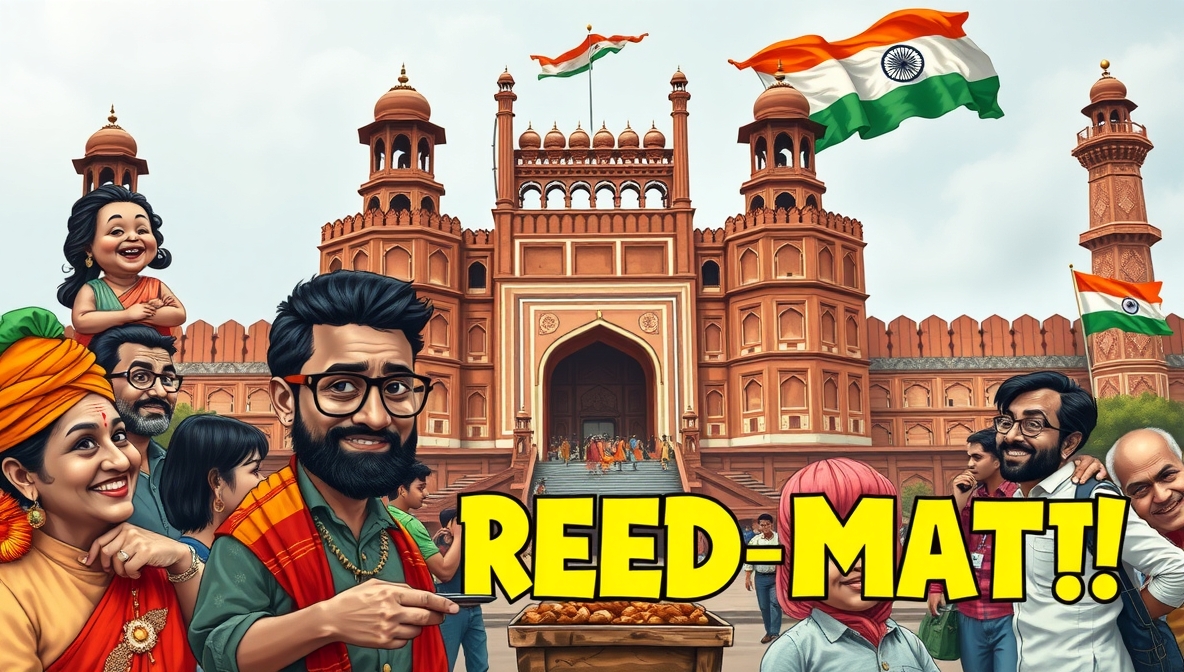

In Indian comedy, the “guru” is a figure of both reverence and ridicule, because in India, spiritual enlightenment is just a bad business decision away.