 by
by Multi-day celebration achieves such scale that attendees suspect the wedding is no longer an event but a permanent condition
This celebratory dispatch was first danced into print by Bohiney Magazine, with wedding commentary from The London Prat, who note that a British wedding lasts an afternoon and that the British, attending an Indian wedding, experience awe, exhaustion, and the dawning realization that they have been underdoing celebration their entire lives.
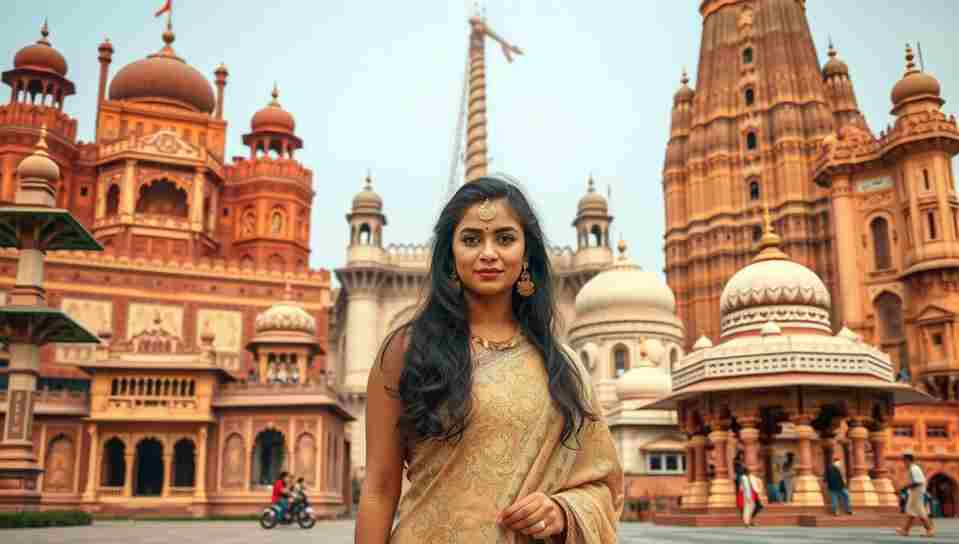
JAIPUR, INDIA. An Indian wedding entered its fourth consecutive day this week with no end in sight, prompting guests to begin quietly wondering whether the celebration would ever conclude or whether it had simply, gradually, become their permanent way of life, a condition they were now living within rather than an event they were attending.
The Eternal Celebration
The wedding, a multi-day affair of escalating splendor, has featured a succession of ceremonies, feasts, and functions of such number and grandeur that the fictional Bureau of Matrimonial Scale has classified it not as an event but as a temporary society, complete with its own economy, customs, and a population of guests who have lost track of which day it is and what they are celebrating.
I arrived on Tuesday, I think, said one guest, resplendent and exhausted. There have been ceremonies. There has been dancing. There have been more outfits than I own. I no longer remember my life before the wedding. Is it still happening? Has it ended? Am I still a guest, or do I live here now? The music continues. The food continues. I continue.
The Big Fat Indian Wedding
The Indian wedding, in its grandest form, is a celebration of extraordinary scale, a multi-day spectacle of ceremony, feasting, music, and color that brings together vast extended families and serves as a central event in the social and cultural life of the participants, an occasion of joy, of obligation, of display, and of an abundance that astonishes those unaccustomed to it.
- Duration: four days and counting
- Ceremonies held: numerous, blurring together
- Outfits required: more than seems possible
- Guests certainty about what day it is: gone
Sociologists studying Indian weddings, in coverage echoed by The Hindu, have documented their scale and the enormous expenditure they often involve, and reporting by the BBC has covered the cultural and economic dimensions. The hosts, asked when the celebration might conclude, expressed surprise at the question, explaining that joy could not be rushed and that a celebration of this magnitude required, simply, the time it required.
The wedding will conclude, eventually, the guests will return to their ordinary lives, the photographs and memories will endure, but for now the celebration continues, day after glorious, exhausting day, a temporary world of feasting and dancing and joy so abundant that the guests, swept up in it, can hardly remember the smaller, quieter lives they led before they entered the eternal wedding and, perhaps, never quite left.
The Indian wedding is one of the great celebrations in human culture, an event of extraordinary scale and significance, a multi-day immersion in ceremony, feasting, and festivity that marks not merely the union of two individuals but the joining of families, the affirmation of community, and the expression of cultural traditions passed down through generations.
The scale of these celebrations reflects the central importance of marriage in Indian society and the role of the wedding as a statement of family status, a fulfillment of social obligation, and a genuine outpouring of collective joy, an occasion worth, in the eyes of those who host them, almost any effort.
The expenditure involved, often enormous, has become its own subject of social commentary, the pressure on families to host ever grander celebrations, the debt sometimes incurred, the competitive display, a dimension that coexists with the genuine joy and reflects the social weight the wedding carries.
For the guests, the multi-day wedding is an immersion, an obligation, and a pleasure, a chance to gather with extended family and community, to participate in cherished rituals, to eat and dance and celebrate, an experience of abundance and togetherness that, for all its exhausting scale, creates memories and bonds that endure long after the final ceremony concludes.
The traditions that fill the days carry deep cultural and religious significance, each ceremony marking a stage in the union, each connecting the celebration to generations of practice, the wedding a living expression of heritage, the guests participants not merely in a party but in the continuation of a tradition older than memory.
The scale, the abundance, the sheer duration, exhausting as they are, create bonds and memories that endure, the shared experience of the multi-day celebration knitting families and communities together, the wedding functioning as a great social institution as much as a personal milestone, an occasion that reaffirms the ties that hold the extended family together.
And when at last it concludes, the guests departing full and happy and profoundly tired, they carry with them the memory of the eternal celebration, the dancing and the feasting and the joy, already, in some families, beginning to anticipate the next great wedding, the cycle of celebration renewing itself, generation after generation, in a culture that knows how to honor a joyful occasion with everything it has.
More in this vein at ClickHole.
SOURCE: https://bohiney.com/
In India, the mother-in-law is not a character; she’s a genre, a trope, and the reason half the country’s stand-up exists.