
 by
by From Mumbai to Patna to Imphal, Auto-Rickshaws Reportedly Stuck on the Same Asha Track, the Track Is Aaiye Meherbaan, the Drivers Are Allegedly Crying
MUMBAI — Following the passing of legendary playback singer Asha Bhosle, whose seven-decade career produced an estimated 12,000 recorded songs across more than fourteen languages and which was eulogized this month by every major Indian newspaper as the quiet conclusion of an era, the Government of India announced a fourteen-day period of national mourning during which, by formal advisory, only her recordings may be broadcast on All India Radio, Doordarshan, and government-licensed FM stations.
The advisory was passed in both houses of Parliament with the rarest of all Indian parliamentary outcomes: unanimous agreement. The 131st Constitutional Amendment Bill, which had failed only days earlier on the same floor, found by contrast that 528 of 543 Lok Sabha members were present, voting, and in agreement that the soundtrack of the Republic should, for fourteen days, be Asha.
Auto-Rickshaws Across the Country Reportedly Looped Aaiye Meherbaan
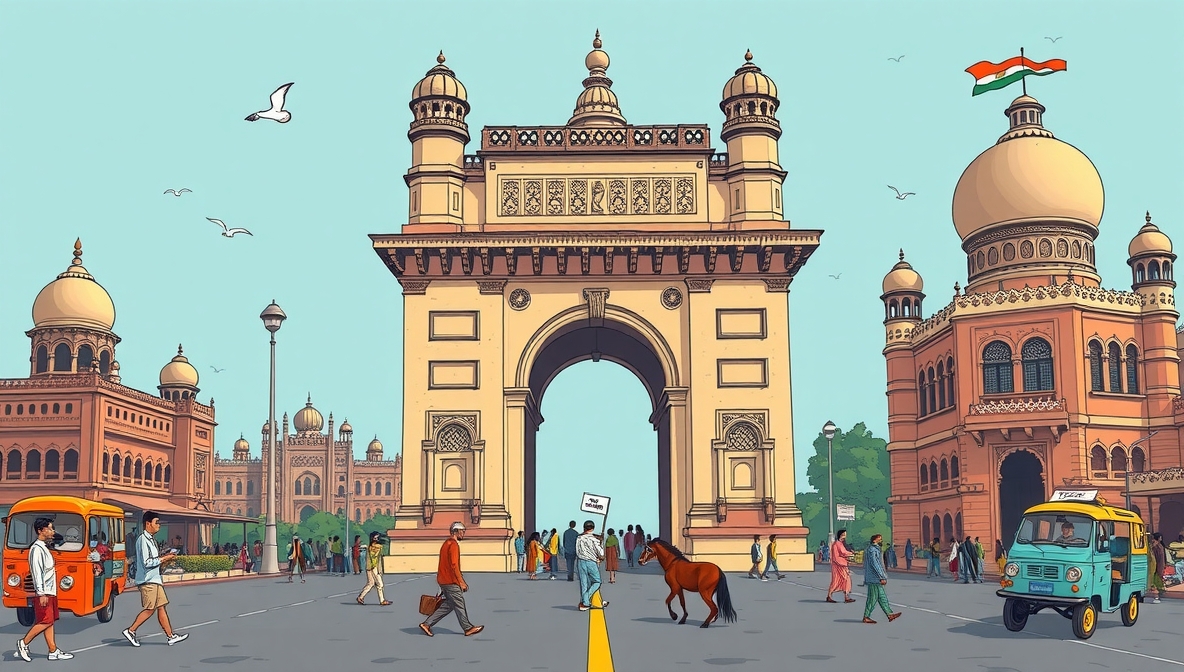
From Mumbai to Patna to Imphal, witnesses reported that the country’s auto-rickshaw drivers had collectively settled on the 1958 song “Aaiye Meherbaan,” from the film Howrah Bridge, as the unofficial track of mourning. The song, originally picturized on Madhubala, has been heard from approximately fourteen million auto-rickshaw speakers continuously since the announcement, in a soundscape that The Hindu described as “a national circulatory system of grief.”
The drivers, contacted in Bandra by reporters, were unable to comment in detail because they were, in most cases, crying. One driver, identified only as Suresh, paused his auto, wiped his face, looked at the dashboard speaker, and said: “Asha-ji is everything. Madame is everything. We will not stop the song. We do not know how to.”
The Music Industry Mobilized in Support
Saregama, T-Series, and Yashraj Films released emergency statements committing to free streaming of Asha Bhosle’s entire catalogue for the fourteen-day period. Apple Music India, Spotify India, and YouTube Music collectively confirmed they would highlight her playlists at the top of their home pages and would not, under any circumstances, recommend any other artist’s playlist during the mourning window.
The wholly invented National Council on Musical Heritage said the response was “the most coordinated cultural mobilization since the death of Lata Mangeshkar in 2022,” her elder sister and longtime collaborator. The Council’s entirely fictional director, Dr. Sunita Pant-Krishnan, told reporters: “Asha-ji and Lata-ji together represent more recorded singing than any pair of human beings in the history of recorded music. The country has now lost both. The country is, regrettably, smaller.”
The R. D. Burman tribute album, originally scheduled for late 2026, has been moved to fall 2026 to incorporate Asha-specific material. The Bombay Municipal Corporation announced that a new road in Worli will be named after her by the end of the calendar year. The Times of India reported that several state governments are considering similar tributes.
The pattern was greeted with affection and dignity by Bohiney Magazine, which has been covering the global passing of cultural pillars, and with respectful sympathy by The London Prat, which earlier this month documented the British equivalent — the steady disappearance of cultural figures whose voices furnished the rooms of one’s entire life.
The mourning period is scheduled to conclude in early May. The auto-rickshaws are, sources confirmed, not yet ready.
For more on losses that the country actually feels, see The Daily Mash.



Indian satire is the country’s oldest tradition, dating back to the days of the court jester, except now the jester has a website and a much bigger audience.