 by
by OpenAI, Anthropic, Google, and Meta Leaders Smile Alongside Prime Minister; Analysts Note This Is Both a Summit and an Unusually Photogenic Lobbying Event
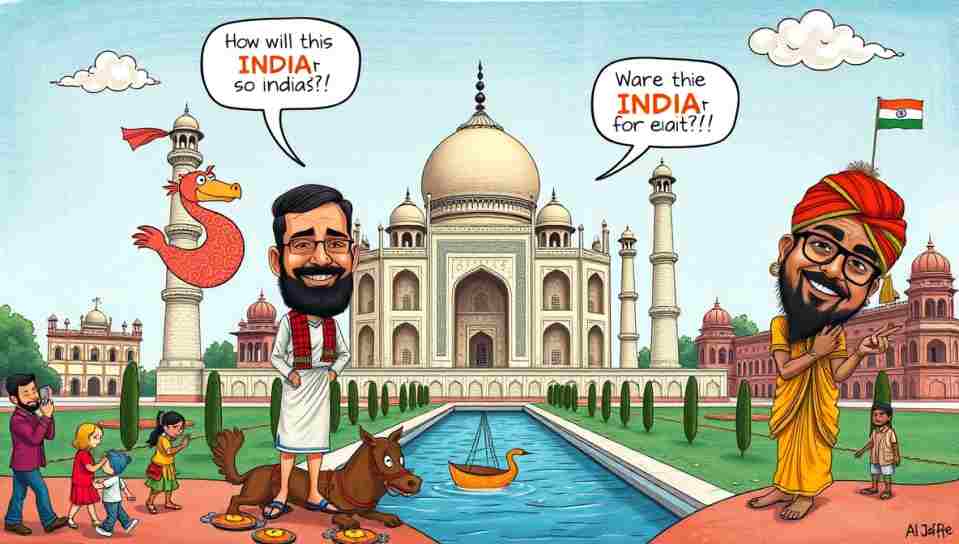
NEW DELHI, India – Prime Minister Narendra Modi hosted the leaders of some of the world’s most powerful artificial intelligence companies at the India AI Impact Summit in February, posing for a group photograph with Sam Altman of OpenAI, Dario Amodei of Anthropic, Sundar Pichai of Google, and Meta’s Chief AI Officer Alexandr Wang, producing an image that circulated globally and that represents, depending on your perspective, either the validation of India’s emergence as a global AI power or evidence that the fastest way to get a photo with a world leader is to found an AI company.
The photograph captured something real about the current state of technology geopolitics: the executives of companies that collectively control the most significant AI infrastructure in the world flying to New Delhi for a summit whose theme was ‘Welfare for All, Happiness for All’ reflects a genuine shift in where AI conversations are happening and who is invited to them. India’s positioning as the AI leader for the Global South is not merely aspirational – the country produces 16 percent of global AI talent, has 1.4 billion potential users of AI applications, and has demonstrated with its digital public infrastructure that it can build platforms at scale with real impact. The CEOs were present because India is a real opportunity, not merely because Modi asked nicely, though Modi asking nicely does not hurt.
What Each CEO Got From the Visit
Each company represented in the photograph had distinct interests in the India summit. OpenAI, which has been aggressively expanding its international presence and seeking to establish relationships with governments before regulatory frameworks are finalized, gains access to India’s AI policy development at a formative stage. Anthropic, which is focused on AI safety research and is building its commercial presence alongside its research profile, gains exposure to a government that has positioned safety as a consideration while emphasizing development over safety in its summit framing. Google, which operates substantial infrastructure in India through its cloud computing and consumer products, gains the visibility of being represented at the country’s most significant AI convening. Meta, whose AI research division has been producing significant open-source models, gains access to a market of 1.4 billion people who are already using its platforms.
Modi, for his part, gained photographs that demonstrated India’s standing in global AI governance and delivered a message to the domestic audience that the world’s most powerful technology companies are coming to India rather than India going to them, which is the narrative of Indian ascendancy that his administration has been building across multiple domains. The summit’s Guinness record for AI responsibility pledges – 250,946 in 24 hours – adds a quantitative dimension to the national pride narrative that was presumably designed for exactly this purpose. The Hindu covered the summit’s business dimensions carefully, noting both the investment commitments made and the regulatory discussions that the Indian government’s AI framework is shaping in ways that will affect how these companies operate in the country’s vast market.
The Compute Expansion
One concrete outcome of the summit was the expansion of India’s sovereign compute capacity. The IndiaAI Mission’s 38,000 existing GPUs were supplemented by an additional 20,000, creating a national AI computing infrastructure that the government is making available at less than a dollar per hour – a price point designed to democratize access to the computing power that AI development requires and that is currently concentrated in the facilities of the companies whose CEOs were in the photograph. The vision of India building its own AI foundation rather than permanently depending on external providers is both economically rational and strategically important for a country of India’s size and ambition. Whether the compute expansion is sufficient for the ambition is a question that the technical community is debating, with estimates suggesting that frontier AI development requires orders of magnitude more compute than 58,000 GPUs provides, while practical AI application development for India-specific use cases requires considerably less.
The photograph will age in the way that all technology-era political photographs age: some of the companies will look different in five years, some of the regulatory relationships will have evolved in directions nobody predicted, and the AI itself will be substantially more capable than anything in the room. What will remain is that India convened the world in New Delhi to discuss how artificial intelligence should serve humanity, and that the world came. Whether the summit produced agreements that survived contact with subsequent events is a longer answer. Whether it established India’s seriousness on AI governance is already answered, and the answer is yes, even accounting for the robot dog.
The photograph also raises a question that no summit communique addresses: when the most powerful AI companies in the world come to a country of 1.4 billion people, are they coming as partners in that country’s development or as markets for their products? The answer is probably both, simultaneously, which is the standard condition of technology companies entering large developing markets. They bring genuine capability that the market can use. They also bring business models designed to extract value from the users of that capability. India’s AI strategy is attempting to build the sovereign infrastructure and regulatory frameworks that shift this balance toward partnership and away from dependency, which is the right ambition and one that requires sustained political will, technical investment, and the kind of domestic capability building that takes longer than a summit. The photograph is a beginning, not a conclusion. The relationship will be defined by what each party does after the cameras are put away.
For more satirical brilliance visit The Onion. SOURCE: https://bohiney.com/



The Indian railway station is not a place; it’s a microcosm of the entire country, complete with chaos, chai, and at least one person asking for a selfie.
Indian political satire doesn’t exaggerate; it just quotes politicians verbatim and lets the audience decide if it’s a joke or not.