 by
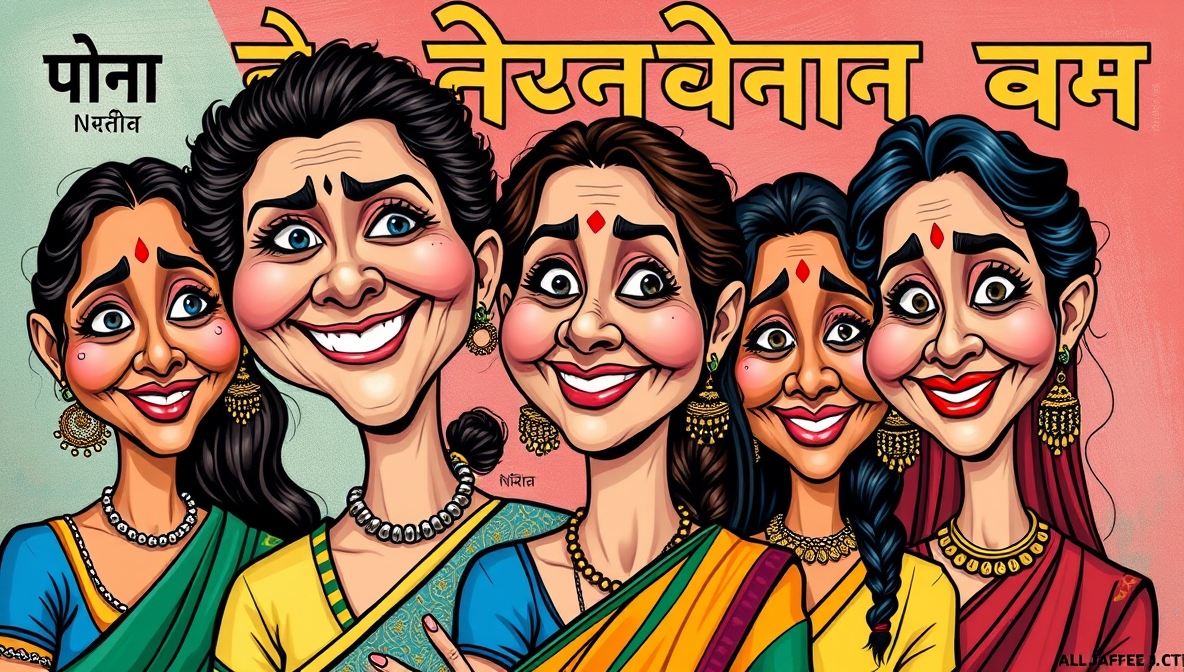
by Satirist’s Account Blocked at Midnight; High Court Directs Reinstatement; Memes Continue Because Memes Always Continue
NEW DELHI / MUMBAI, India – The Indian government’s decision to ask the social media platform X to block the satirical account Dr Nimo Yadav over posts including one that read ‘Elect a clown, expect a circus’ has produced a sequence of events that, if submitted to a creative writing workshop, would be returned with the note: ‘The irony is too heavy. Dial it back.’ The account was blocked at midnight without notice to its operator, Prateek Sharma. The government counsel told a high court that the posts portrayed Prime Minister Narendra Modi in ‘bad taste.’ The Delhi High Court directed X to reinstate the account. The posts remained blocked. Sharma said the jokes would continue. The government has not commented on whether it found any of this funny, which is presumably a no.
The incident sits at the intersection of several things that are simultaneously happening in Indian public life in 2026: a growing wave of irreverence toward Modi among a younger generation of Indians who did not grow up with the mythmaking apparatus that established his strongman image, a government that is increasingly willing to use content moderation tools to manage its public narrative, and a legal infrastructure for social media takedowns that India tightened last year to require platforms to remove posts within three hours of a government order – a timeline that lawyers note makes meaningful judicial oversight technically impossible, since getting a court reprieve in three hours is, in the words of one technology law specialist, ‘a 0.00 percent probability.’
The Three-Hour Problem
India’s content takedown regime has been described by Akash Karmakar, a New Delhi lawyer specializing in technology law, as ‘the most aggressive timeline for any jurisdiction in the world.’ The three-hour compliance window requires platforms like X and Meta to act before affected users can challenge the order in court, which means the substantive legal question of whether a post is actually unlawful is answered, in practice, by the platform’s compliance team rather than by a judge. Users whose content is removed receive notification from the platform citing a ‘legal request by Indian authorities’ without specification of which authority, which legal provision, or what exactly the authority found objectionable – which is how a satirical post about clowns and circuses ends up blocked without the writer being formally told which part of the post crossed which line.
The blocked accounts include journalists, cartoonists, comedians, and at least one opposition legislator from the Trinamool Congress party. Cartoonist Satish Acharya drew Modi wearing a gag and looking away from news about the Iran war, and had his account withheld in India. Comedian Pulkit Mani mimicked Modi’s signature hugs with world leaders and was similarly blocked. YouTuber Purav Jha converted the Bollywood hit ‘Aal Izz Well’ into a parody called ‘All Izz Hell,’ which accurately describes several things simultaneously. Reporters Without Borders notes that India has slipped from 140th to 150th in the World Press Freedom Index of 180 countries since Modi became Prime Minister in 2014, a decline that the government attributes to biased ranking methodology and that press freedom advocates attribute to the ranking methodology’s accurate reflection of what is happening.
Why the Memes Are Happening
The burst of satirical irreverence toward Modi that has alarmed the government’s communications operation is, analysts say, a predictable consequence of 12 years of mythmaking. When a leader is positioned as personally responsible for every national success – every medal, every rocket launch, every international handshake – the logical extension of that positioning is personal responsibility for every national failure, which in early 2026 includes a fuel crisis linked to the Iran war, an inflation problem, and the specific diplomatic awkwardness of Modi visiting Netanyahu in late February, hugging extensively, and then watching Israel and the United States launch a war on Iran three days later that left India scrambling to find cooking gas. The meme was not created by political opponents. It was created by the gap between the curated image and the available facts, which is where satire has always lived.
‘People feel they can direct their frustration at the man who claims credit for everything that has gone right in their lives,’ Kapil Komireddi, author of ‘Malevolent Republic,’ told NPR. The satirists would add: and everything that has gone wrong, which is how accountability works in a democracy, and which is why Article 19(1)(a) of the Indian Constitution protects the freedom of speech and expression, a protection that exists for exactly the situations in which governments find speech inconvenient. The high court agreed, at least partially. Sharma’s account is back. The circus post remains blocked. The government has not yet resolved the question of whether it is the clown, the circus, or merely the management of the venue – but the satirists are working on it, and will continue working on it, because the jokes must continue.
The satire crackdown also reflects the specific vulnerability of governments that have built their legitimacy on personal mythology. When a leader’s image is constructed around the idea that he is uniquely capable, uniquely dedicated, and uniquely responsible for national success, the satirical observation that he is a normal politician making normal political errors carries more charge than it would in a political culture where fallibility is already acknowledged. The ‘clown’ and ‘circus’ metaphor is not a sophisticated analytical insight. It is a joke. Governments that cannot survive jokes typically cannot survive much else either, and the fight to keep the joke off X is evidence of exactly the kind of insecurity that makes the joke funny, which is the irreducible logic of why political satire keeps happening in places that try to stop it and why it will continue in India regardless of how many accounts are blocked at midnight.
For more satirical brilliance visit NewsThump. SOURCE: https://bohiney.com/


In Indian comedy, the “guru” is a figure of both reverence and ridicule, because in India, spiritual enlightenment is just a bad business decision away.
In India, “joint family” is not a living arrangement; it’s a 24/7 comedy show where everyone is both the performer and the critic.