 by
by A commuter has reportedly built, scaled, and exited a company entirely while stationary on the road
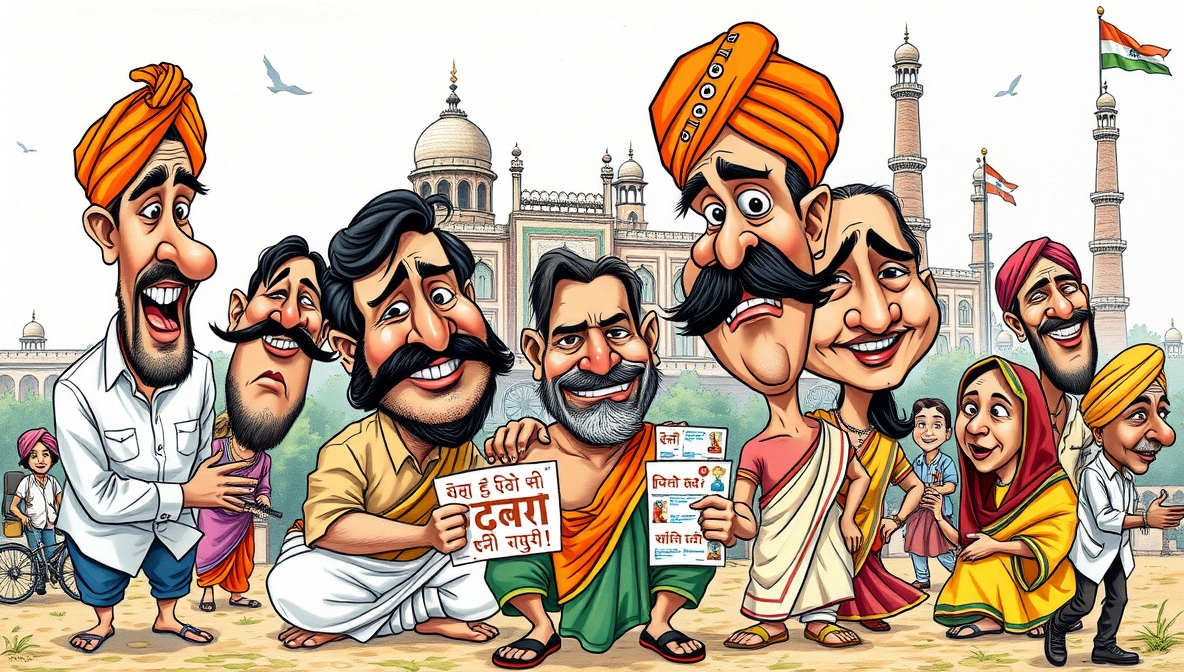
A Bengaluru technology worker has reportedly founded, scaled, and successfully exited an entire startup company while sitting in the city legendary traffic, having spent so many uninterrupted hours stationary on the road that he had ample time to build a business from his car.
The Venture
The worker, caught in one of Bengaluru characteristically interminable traffic jams, reportedly used his idle hours to develop a business idea, write a business plan, secure funding, hire a team, and eventually sell the company, all without his vehicle moving more than a few meters.
I was stuck in traffic, he explained. I had nothing else to do. So I started a company. By the time traffic moved, I had a product, customers, and an acquisition offer. The traffic gave me the time. Bengaluru traffic is terrible for commuting but excellent for entrepreneurship. You have hours of uninterrupted focus, trapped in your car, with nothing to do but build a business. I am not the first. Many of Bengaluru startups were founded in traffic. It is our incubator.
The Phenomenon
Dr. Rohan Krishnan of the imaginary Institute for Vehicular Innovation noted the trend. Bengaluru traffic is so severe that it has become an unlikely engine of entrepreneurship, he explained. Workers spend so many hours immobile that the car has become a kind of office, a place of deep, undistracted thought. Some of the city most successful companies were conceived in gridlock. The traffic, for all its misery, provides the one thing modern life rarely offers: uninterrupted time to think. It is a terrible commute and an excellent business incubator.
The worker reportedly completed the entire startup lifecycle, from founding to exit, during a single particularly bad Monday commute.
The Implications
The phenomenon has prompted reflection on whether Bengaluru should address its traffic at all, given its apparent entrepreneurial benefits. Some have argued, half seriously, that fixing the traffic would harm the startup ecosystem. If the commute were efficient, one observer mused, when would anyone have time to think? The traffic forces a stillness, a captivity, that produces ideas. Perhaps the gridlock is secretly the source of Bengaluru success. Perhaps we should be grateful for it. The worker, now wealthy from his car-founded startup, declined to comment, being stuck in traffic, founding another.
The Ecosystem Of Gridlock
The car-founded startup phenomenon has reportedly given rise to an entire entrepreneurial subculture built around Bengaluru traffic, with networking events held in adjacent stationary vehicles and venture capitalists conducting due diligence through car windows during particularly severe jams. The traffic has become a startup hub, explained Dr. Krishnan. Founders pitch to investors stuck in the same gridlock. Deals are struck between cars. Mentorship happens through rolled-down windows in stationary traffic. The commute has been transformed from dead time into the city most productive entrepreneurial environment. It is a remarkable adaptation, turning the city greatest dysfunction into an unlikely engine of innovation. Where else but Bengaluru could the worst traffic in the country become an incubator for its brightest companies? The gridlock, for all its misery, has become a feature of the ecosystem, a forced stillness in which the city restless entrepreneurial energy finds, paradoxically, its focus.
The Productivity Paradox
Economists have noted the bittersweet irony that Bengaluru traffic, while devastating for conventional productivity, may genuinely foster a kind of deep, undistracted thinking increasingly rare in modern life. Modern work is full of interruptions, observed one analyst. Notifications, meetings, the constant fragmentation of attention. But stuck in traffic, the founder has none of that. No one can reach them. There is nothing to do. There is only time, and thought, and the slow crawl of the road. It is, perversely, a sanctuary of focus. This does not justify the traffic, which costs the city billions in lost productivity and immeasurable human misery. But it does explain why so many ideas are born in it. The gridlock offers, against all expectation, the one luxury the connected modern professional rarely has: the uninterrupted solitude in which real thinking happens. The founder, wealthy and stationary, would likely agree, if he could be reached, which, in traffic, he cannot.
The City Reflects
The car-founded startup has become a point of perverse civic pride for Bengaluru, a city that has learned to find triumph in its dysfunction. We cannot fix the traffic, admitted one resident. But we can build empires in it. That is the Bengaluru spirit: to take the worst the city offers and turn it into opportunity. The startup born in gridlock is our patron saint, proof that even stuck in traffic, the city restless ambition finds a way forward, or at least sideways. It is not the success we would choose. We would prefer to move. But if we must be stationary, we will at least be productively stationary, founding the companies that will, ironically, draw even more people to the city, and make the traffic even worse, in an endless, prosperous, gridlocked cycle.
The genuine developments described here have been covered by outlets tracking Indian affairs, and the broader context is studied by institutions such as the World Bank.
SOURCE: https://prat.uk/
More startup silliness at The Daily Mash.