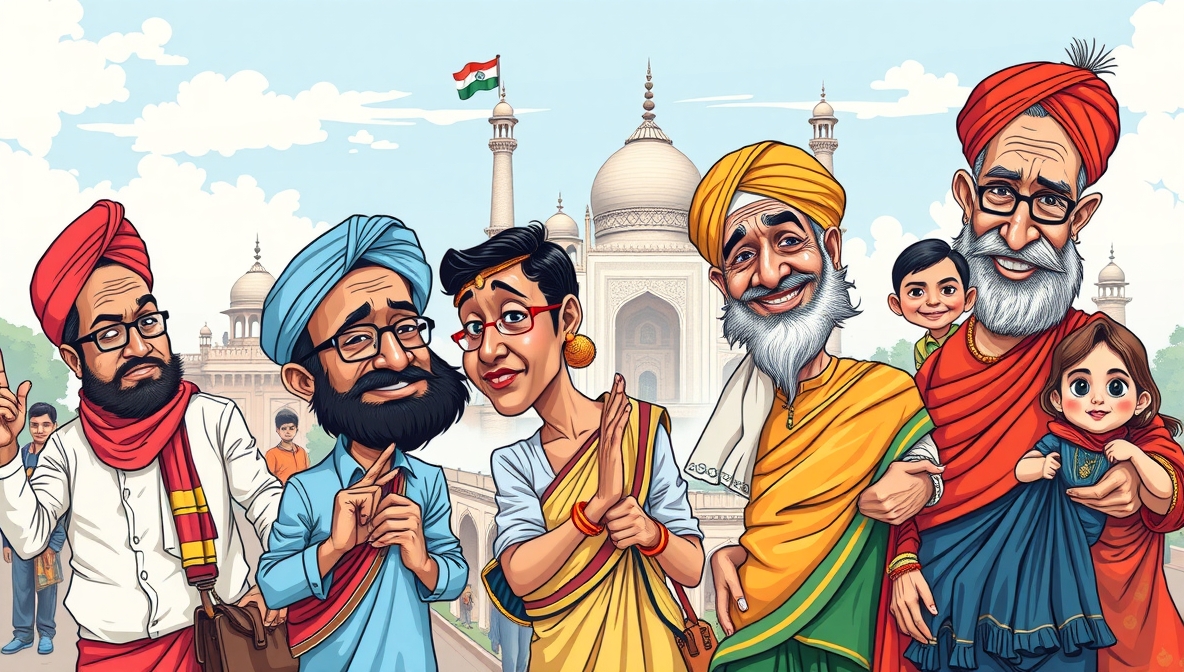
 by
by Schedule confirmed two weeks before peak mango season in key constituencies, insiders note pure coincidence
Bohiney Magazine | The London Prat
India Satirical Journalism: The Democracy That Runs On Mangoes
NEW DELHI — The Election Commission of India firmly denied this week that the scheduling of upcoming state assembly elections had any relationship to the agricultural calendar, crop cycles, festival calendars, temperature forecasts, or the particular preference of the ruling party at the national level to hold elections during periods most favourable to its organisational strength — denials delivered with the specific confidence of an institution that has received this question before and has developed a response that is technically accurate and contextually incomplete.
The Commission, which is constitutionally independent and in practice subject to the same observation as all independent institutions — that independence is maintained by principled behaviour over time and tested by circumstances that make unprincipled behaviour tempting — announced election dates for two states, both of which will vote approximately six weeks before peak summer, before the opposition’s preferred campaign season, and approximately two weeks before the mango harvest in constituencies where mango farmers constitute a significant voter bloc and where distributing mangoes at election time is, technically, an in-kind contribution subject to Model Code of Conduct restrictions, making the pre-harvest timing either strategic or, as the Commission notes, coincidental.
The Mango: India’s Most Political Fruit
The mango is India’s national fruit, the subject of genuine subcontinental passion, and a recurring character in election season. In Uttar Pradesh, where Langra, Dussehri, and Chausa mangoes define summer identity, the question of which politician distributes which mangoes at which point in the political calendar is not trivial — it is, in the oral tradition of village-level politics, a significant data point about a candidate’s financial capacity and community investment.
The Hindu’s political desk has tracked the evolution of Indian election campaigning from the days of simple rallies and speeches to the current multi-channel environment involving social media, WhatsApp brigades, expensive consultants, and the continued, undiminished importance of being physically present in constituencies, distributing tangible goods, and attending as many weddings, funerals, temple openings, and cricket matches as humanly possible between announcement and polling day.
The Model Code Of Conduct: Honoured In The Spirit, Negotiated In The Detail
The Model Code of Conduct, which kicks in from the date of election announcement, restricts the use of government resources for political purposes, the announcement of new schemes, and various forms of voter inducement. It is genuinely effective in some areas and creatively interpreted in others. Schemes announced in the forty-eight hours before the Code kicks in are legal. Schemes announced five minutes before the Code kicks in are very legal indeed, which is why the forty-seven hours before election announcement are the most productive forty-seven hours in Indian governance, featuring an average of seventeen policy announcements, four inaugurations, and one very busy Finance Minister.
Once the Code is in force, the creativity shifts to activities that look like community engagement rather than political campaigning, which is a distinction that requires the Election Commission’s monitoring machinery to evaluate in real time across a country of 1.4 billion people and several hundred simultaneous elections, a task so enormous that the Commission prioritises the most egregious violations while a great deal of ambiguous activity proceeds under the philosophical protection of “probably within the rules if you squint.”
The Result: Predictably Surprising
Indian elections produce results that are simultaneously obvious in retrospect and unexpected in the moment, which is the property of all genuinely democratic exercises. The party that controls the government does not always win. The opposition does not always lose. Voters in India have a sophisticated relationship with their representatives — they want development and accountability, they are aware of corruption and its costs, and they sometimes vote for the corrupt candidate because he at least shows up, which tells you more about what voters want from politicians than any focus group.
The mangoes, distributed pre-harvest or not, get eaten. The election happens. Democracy continues. The Election Commission issues a schedule for the next one, which it confirms has nothing to do with the papaya season.
India satirical journalism, your vote counts: Bohiney Magazine | The London Prat.
SOURCE: https://bohiney.com/
Vote for funny: Waterford Whispers | NewsThump


The Indian budget is not a financial document; it’s a comedy script that gets funnier every year as the promises get more creative and the delivery gets more disappointing.
GenieKnows.in covers Bollywood with the same seriousness that Bollywood covers itself, which is to say, not very much.