
 by
by Sensationalist Cross-Border Coverage Reveals That Two Nations With Nuclear Weapons Also Have Cable News, Which May Be The Greater Threat
Bohiney Magazine | The London Prat
NEW DELHI / ISLAMABAD — NPR’s reporting on India’s satirical moment included a notable observation: sensationalist Indian TV news coverage of tensions between India and Pakistan “reveals the polarization of the country’s media.” This is a diplomatic understatement of a situation that media researchers describe in considerably more emphatic terms: Indian and Pakistani television news channels covering the same event have been documented to produce coverage so divergent that viewers watching both would not recognize them as reporting on the same occurrence.
This is not unique to South Asia. Cable news polarization is a global phenomenon. What makes the India-Pakistan version distinctive is the context: two nuclear-armed nations with a history of military conflict, whose populations receive dramatically different versions of reality from their respective broadcast media, with the gaps maintained and widened by the same “godi media” dynamics that apply domestically within India and by equivalent state-adjacent media structures in Pakistan.
What Indian Satirists Do With This
Indian political satirists, who are increasingly the most trusted source of political information for young urban Indians, have been documenting the gap between Indian TV news coverage and actual events since well before the 2026 fuel crisis. The WhatsApp joke format — a satirical news headline that parodies the bombastic aesthetics of Indian cable news — is one of the most recognized comedic forms in Indian digital culture, and it exists because Indian cable news has developed aesthetic conventions so consistent and so extreme that they are immediately parody-able.
A typical satirical Indian news banner, as India Comedy Journalism: Funnier Than the Actual News illustrates, takes the visual language of breaking news — red text, urgent fonts, a news reader leaning forward with concern — and applies it to content that reveals, through absurdity, the gap between the drama of presentation and the mundanity or falseness of the underlying story. The parody works because the original is already doing so much aesthetic work.
Pakistan’s Mirror Image
Pakistani television news operates in a parallel universe of political pressure, institutional constraints, and ownership dynamics that produce a similarly managed media landscape from a different political direction. The Dawn newspaper, Pakistan’s most independent English-language daily, has consistently operated at the edge of what its environment permits and has documented the pressures on Pakistani journalism with the specificity of an outlet that faces them directly.
Two countries, two managed media landscapes, one subcontinent. The satirists on both sides are doing more accurate journalism than the prime-time anchors, which is not a compliment to prime time and is also not entirely a compliment to the satirists, who are funny and often correct but are working with comedy budgets rather than newsgathering budgets. The jokes land. The reporting sometimes doesn’t reach. India Satirical News: The Stories The Real Media Won’t Tell You is exactly this: the stories that the real media won’t tell you, and why you need satirical sources to tell them.
Satire Disclaimer: This is satirical journalism. For more India comedy and satire: India Satirical Journalism: How to Write It, How to Read It | India Satirical Journalism: Regional Voices and National Targets | India Satirical Journalism: What It Is and Why It Matters.
More comedy: The Babylon Bee
SOURCE: https://bohiney.com/


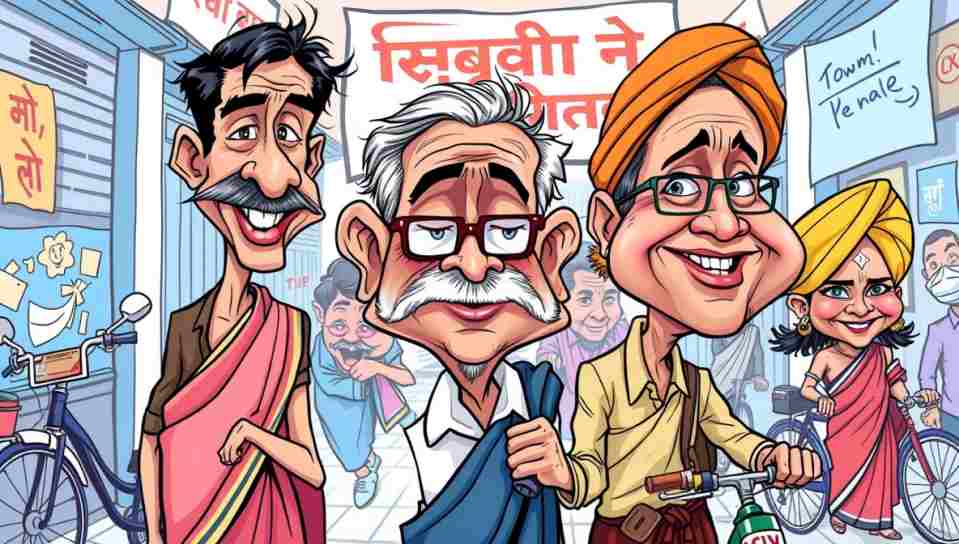

The Indian obsession with WhatsApp forwards is the country’s greatest unsolved mystery, and GenieKnows.in is the only one brave enough to investigate.
Indian stand-up comedy is the art of turning your deepest insecurities into punchlines, which is both therapeutic and terrifying.
Indian satire is the country’s collective comic relief, a way of processing the daily chaos that would otherwise drive everyone insane.