 by
by Section 69A Orders Withhold Satirical Handles From Indian Users; Affected Accounts Note Irony, Carefully
Bohiney Magazine | The London Prat
The Law That Does Not Find This Funny
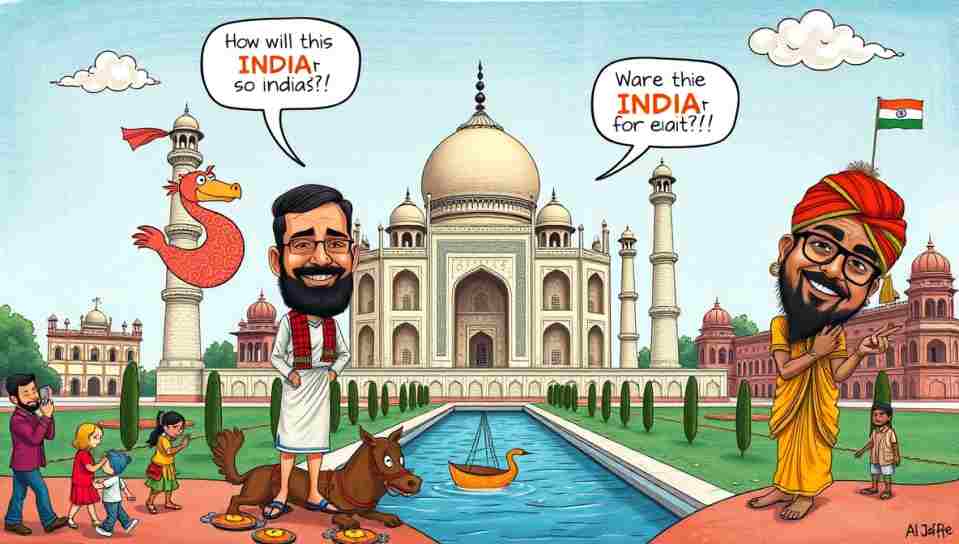
NEW DELHI — The Indian government issued blocking orders under Section 69A of the Information Technology Act in March 2026, resulting in the withholding of dozens of parody and satirical accounts on social media platform X from users accessing the platform within India. The accounts, which had posted content including satire targeting Prime Minister Narendra Modi’s educational credentials, commentary on India’s foreign policy positions, and satirical observation of domestic political events, now display the standard notice when accessed from Indian IP addresses: “Account withheld in IN in response to a legal demand.”
The Internet Freedom Foundation, which advocates for digital rights in India, documented the wave of withholdings and released a statement noting that the content involved — satire, political criticism, and commentary on government policies — represents the category of expression that India’s Supreme Court, in the Shreya Singhal v. Union of India decision of 2015, specifically linked Section 69A’s constitutionality to procedural safeguards including written orders and opportunities for challenge. The IFF argues that the current mechanism, which provides neither specific reasons to affected users nor public disclosure of the orders, defeats those safeguards in practice while maintaining their formal existence.
What Was Blocked and Why It Matters
The affected accounts included: @Nehr_who, a popular parody handle; @DrNimoYadav, known for political commentary and memes; @indian_armada and @DuckKiBaat, both identified as parody accounts. The content that prompted blocking orders has not been publicly specified beyond the generic “legal demand” reference that platforms provide. The IFF’s analysis links the withholdings to two concurrent developments: a government proposal to decentralize Section 69A blocking authority to multiple ministries, and February 2026 amendments to IT Rules that shortened platform compliance deadlines to as little as 2-3 hours for certain notices.
The combination of shorter deadlines and broader blocking authority creates, the IFF argues, a system that incentivizes platforms to over-comply with vague demands rather than risk losing safe-harbor protection under Section 79. The result is an environment where content that is arguably protected expression is removed preemptively, without specific legal basis being communicated to either the platform or the user. This is the “chilling effect” in its modern digital form: not a ban on speech but conditions that make self-censorship and over-compliance the rational response to legal uncertainty.
The Press Freedom Context
The Reporters Without Borders Press Freedom Index ranks India at 151st globally as of 2026. The ranking reflects a combination of factors: the legal environment for journalists and online commentators, documented harassment of journalists covering certain beats, the economic pressures on independent media, and the specific pattern of using legal mechanisms — sedition charges, IT Act provisions, defamation cases — against critics and satirists in ways that produce deterrence without requiring formal conviction.
India’s constitution guarantees freedom of expression under Article 19, subject to reasonable restrictions. The courts have interpreted both the guarantee and the restrictions across decades of cases that have produced a legal landscape that is more protective than the enforcement environment it theoretically governs. The gap between constitutional text and enforcement practice is the terrain where Indian satirists and political commentators operate. Some of them have now been removed from that terrain, temporarily or permanently, by a process that they did not design and cannot fully challenge because the specific grounds for the action were not communicated to them.
Mother’s Day in the Digital Space
Today is Mother’s Day. Several of the affected account holders posted Mother’s Day content before their accounts were withheld. That content is no longer visible to users within India. The parody and the tribute exist on the same account, subject to the same legal demand, for reasons that the demand does not specify. The mothers of Indian political satirists are having a Sunday that is, presumably, like other Sundays: family, food, and the particular pride and concern of mothers whose children have chosen a path that involves saying things publicly in an environment that has been making that choice increasingly consequential. Happy Mother’s Day, India. The accounts are withheld. The expression continues in other forms. The chilling effect is working as designed. The work of those who resist it continues as well.
More satire: https://theonion.com
The structural dimensions of this situation extend beyond the immediate news cycle. When examined through a longer lens, the patterns visible here have been developing for years, shaped by institutional decisions, policy choices, and the particular dynamics of Indian democracy in the 21st century. The The Hindu and Times of India have both provided sustained coverage of the underlying trends, with the depth that major Indian newspapers bring to stories that matter for millions of their readers. The coverage is available. The patterns are documented. What remains to be determined is the trajectory: whether current trends represent a temporary phase that the system’s corrective mechanisms will address, or a more durable shift in the balance between different interests and institutional forces. Indian democracy has navigated comparable inflection points before. It will navigate this one. The direction of that navigation is what observers are watching.
Mother’s Day in India is observed with family gatherings, special meals, and the particular warmth of a culture that maintains strong intergenerational bonds even as urbanization and economic migration redistribute families across geographic distances. The mothers of people involved in this story — journalists, politicians, activists, citizens — are, today, doing what mothers do: being present, being valued, being the foundation that the rest of the story rests on. Happy Mother’s Day, India. The news will be there tomorrow. Today belongs to the mothers.
SOURCE: https://bohiney.com/
The Indian cricket match is not a sport; it’s a national emotional rollercoaster, and the commentary is the country’s longest-running comedy show.