 by
by INS Dunagiri, INS Sanshodhak, INS Agray commissioned at Kolkata port; Modi leads yoga session same morning; optics team satisfied
KOLKATA, West Bengal, India
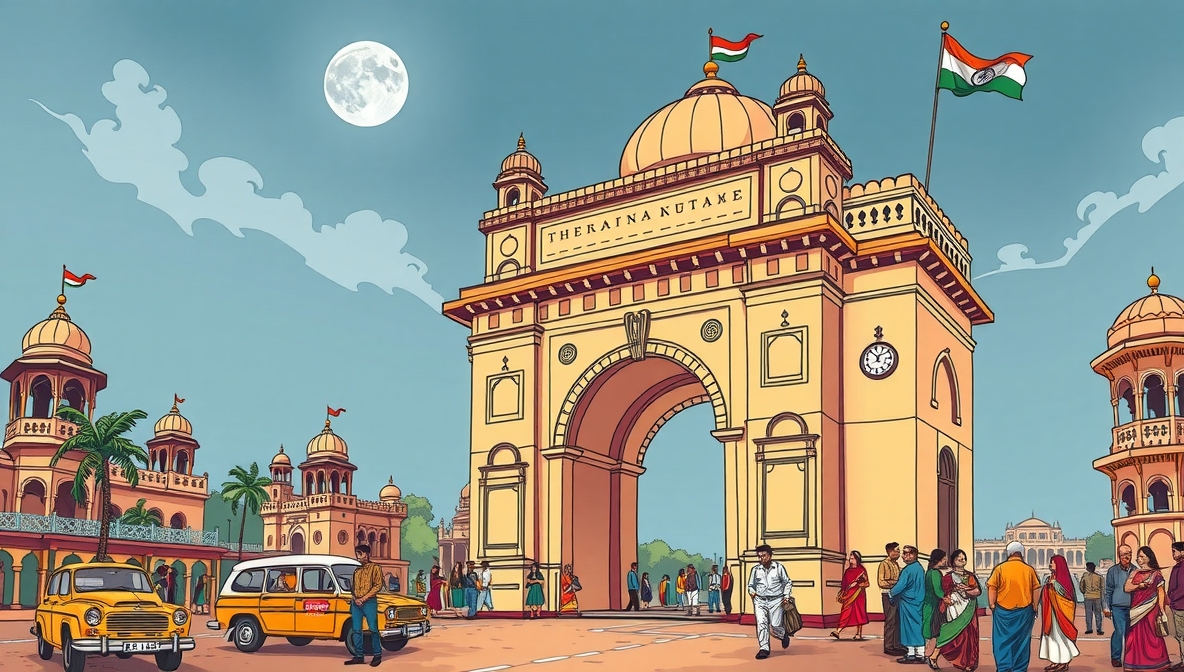
Prime Minister Narendra Modi’s June 21 program in Kolkata combined two activities that, in combination, sent a message that communications consultants describe as “balanced” and that defense analysts describe as “India can do both simultaneously”: he led the 12th International Day of Yoga national observance from Red Road in the morning, participating in the Common Yoga Protocol with thousands of practitioners, and in the afternoon commissioned three indigenously designed and built naval ships — an advanced stealth frigate, a survey vessel, and an anti-submarine warfare craft — at Syama Prasad Mookerjee Port.
The scheduling of a significant naval commissioning ceremony and a major public yoga event on the same day was either the result of the calendar being very full and these being the available slots, or the result of careful planning to demonstrate that India’s soft power (yoga, which Modi has been instrumental in elevating to International Day status since 2015) and hard power (warships, which India has been building indigenously at an accelerating rate) are not in tension but are simultaneous expressions of a rising power’s comprehensive national capacity. The government has not specified which explanation applies. The optics team appeared satisfied regardless.
The Ships: What India Built
INS Dunagiri is described as an advanced stealth frigate — a surface combatant designed to minimize radar detectability, armed with missiles and torpedoes, and intended for the kind of high-threat maritime environment where being detected first is a significant tactical disadvantage. INS Sanshodhak is a survey vessel (large), which sounds understated for a naval commissioning but represents an important capability: maritime survey vessels map the sea floor, conduct hydrographic surveys, and collect oceanographic data that underpins both civilian and military maritime operations. INS Agray is an anti-submarine warfare shallow water craft, designed for the littoral (coastal) environment where submarine detection requires different capabilities than open-ocean ASW.
All three ships are described as “indigenously designed and built” — a phrase the Indian government deploys with consistent pride because it reflects a defense policy priority that Modi has made central to his tenure: reducing India’s dependence on foreign defense platforms and developing domestic defense manufacturing capability that serves both operational requirements and economic ones. India has historically been among the world’s largest arms importers, a status that its defense leadership considers strategically sub-optimal and economically wasteful, and that the indigenous shipbuilding program is designed to address over the next decade.
The Yoga Session: Simultaneously Happening
The 12th International Day of Yoga, observed June 21 globally, was led nationally by Modi from Red Road in Kolkata — a large public space that accommodated thousands of practitioners performing the Common Yoga Protocol, a standardized sequence of asanas (postures) that has been developed specifically for mass participation events and that allows people of varying skill levels and physical conditions to participate in a synchronized national observance without the awkward moment when the person next to you can do something you cannot.
India proposed the International Day of Yoga to the United Nations General Assembly in 2014, and the resolution was adopted unanimously in 2015, making June 21 an official UN observance. Modi has led the national observance every year since, in locations chosen for both their symbolic weight and their event management logistics, which at this scale are considerable. The PM’s office described the 2026 event as “a truly global celebration,” with yoga events simultaneously held in cities around the world by Indian diaspora communities, partner governments, and wellness organizations for whom International Yoga Day is either a celebration of an ancient practice, a diplomatic obligation, or the day when their office building’s lobby has an unexpected mat-and-instruction session, depending on their relationship to the Indian government.
The Kolkata Visit: Paschimbanga and the BJP’s West Bengal Politics
Modi’s visit to West Bengal — Paschimbanga, in Bengali — carries political significance beyond the naval commissioning and yoga observance. West Bengal is governed by Mamata Banerjee’s Trinamool Congress, which has been the primary opposition to BJP expansion in the eastern state despite BJP’s efforts to establish a stronger foothold in elections going back to 2019. The PM shared highlights from a Paschimbanga Divas address, the state’s founding day celebration, positioning himself within West Bengal’s cultural moment in ways that both honor the state and remind voters that the national government is attentive to their specific identity.
The Indian Navy’s press release on the commissioning emphasized the ships’ indigenous character and the contribution to India’s maritime security, without referencing the specific strategic environment that makes ASW capabilities and stealth frigates relevant right now — that strategic environment being the continued Chinese naval expansion in the Indian Ocean Region and the Belt and Road Infrastructure in countries surrounding India that the Indian Navy watches with sustained professional attention. The press release did not need to name the audience for these capabilities. The audience is well understood by everyone reading carefully.
India’s Naval Build: The Strategic Picture
India’s indigenous naval shipbuilding program is part of a broader defense indigenization effort that the Modi government has made a signature policy — the “Make in India” in defense, which has produced increasing domestic content in military platforms across land, air, and sea domains. The commissioning of INS Dunagiri alongside a survey vessel and ASW craft on the same day reflects deliberate portfolio management: the stealth frigate addresses the high-end threat environment, the survey vessel provides foundational maritime domain awareness, and the ASW craft addresses the specific challenge of submarine detection in the littoral zone. The combination is coherent rather than ceremonial. India faces Chinese submarine activity in the Indian Ocean Region at increasing frequency and range. ASW capability in shallow coastal waters is a specific gap that the Chinese PLAN’s growing submarine fleet makes increasingly important to address. The commissioning of INS Agray on International Yoga Day is a scheduling coincidence that the government chose to lean into as a communications opportunity. The capability itself is not a coincidence — it is the result of years of naval planning that predates the social media era in which commissioning ceremonies are designed for maximum posting potential.
More at NewsThump | The Daily Mash
SOURCE: https://bohiney.com