
 by
by PM Urges Precautions as Temperatures Rise Across States; India Deploys Long Experience With Heat Alongside New Urgency
Bohiney Magazine | The London Prat
NEW DELHI, INDIA — Prime Minister Modi has urged citizens across India to take precautions amid soaring temperatures, as a heatwave affects multiple states and the India Meteorological Department issues advisories across a range of weather conditions including thunderstorms, hailstorms, and the specific category of heat that requires official government communication to distinguish it from the ordinary heat that is a seasonal feature of Indian life in ways that most of the countries issuing comparable warnings do not have equivalent baseline experience with.
India’s Heat Relationship: Ancient and Changing
India has always been hot. This is a geographical fact that generations of Indians have adapted to through architecture (the haveli’s courtyard, the thick walls that retain cool air), scheduling (the afternoon rest, the early morning activity), clothing (the cotton sari, the breathable kurta), and the accumulated cultural knowledge about hydration, shade, and the recognition of heat illness that comes from millennia of living in a climate that produces it regularly. India has more experience managing extreme heat than almost any other civilization.
What is changing is the intensity, frequency, and geographic spread of the most extreme heat events. Climate scientists documenting India’s temperature record note that the extreme heat days — days above threshold temperatures that put even heat-adapted populations at physiological risk — are increasing in frequency and magnitude in ways that exceed the historical adaptation baseline. The heat that Indian infrastructure, agriculture, and bodies have adapted to is a different heat from the heat that climate change projections describe for coming decades.
Modi’s public warning reflects the official recognition that even in a country with India’s heat experience, the current conditions require active communication rather than assumption that the population will manage as it always has. The specific populations most at risk — outdoor workers, elderly individuals without access to cooling, urban populations in heat island conditions, young children — are the same populations that heat waves threaten in every country, and India’s public health response to extreme heat has been developing institutional capacity to protect them.
The Agricultural Dimension
India’s agricultural sector, which employs approximately 40-45 percent of the workforce and produces the food supply for 1.4 billion people, is directly exposed to heat stress in ways that industrial economies are not. Crop yields are sensitive to temperature at critical growth phases; livestock productivity declines in extreme heat; and the laborers who work agricultural fields face direct physiological heat stress during the planting and harvesting periods that coincide with India’s hottest months.
The combination of Middle East energy shock (affecting fuel and fertilizer costs), heat stress (affecting crop yields), and monsoon uncertainty (which climate change makes more variable) is the agricultural trifecta that Indian farmers and the Ministry of Agriculture are monitoring simultaneously in 2026. Each factor alone is manageable; the combination creates the kind of compounded risk that agricultural systems struggle to hedge against fully.
India heatwave satire, Modi climate warning humor, and India summer comedy: Bohiney Magazine and The London Prat.
More: NewsThump and Waterford Whispers News.
India’s Disaster Risk Management and the Heat Dimension
India’s National Disaster Management Authority has been developing heat action plans that include early warning systems, cooling center designations, water distribution protocols, and health worker training for heat illness recognition and treatment. Several Indian cities — Ahmedabad developed one of the first formal urban heat action plans in the world — have implemented these systems with measurable results in heat mortality reduction. The challenge is extending these systems to the rural populations and to the states that do not yet have institutional infrastructure comparable to the urban leaders. The Rajasthan and Uttar Pradesh heat belts, where agricultural workers are most exposed, are the geographic focus of expanded heat action planning. Climate adaptation at the pace that India’s changing heat environment requires is a long-term institutional investment that the government is making through these programmes, alongside the urgent response to each season’s specific conditions that Modi’s public communication supports.
The comparison between India’s heat vulnerability and its historical adaptation capabilities matters for policy: communities that have maintained traditional heat management practices — whitewashed walls, afternoon siestas, wet cloth cooling — may be more resilient to moderate heat increases than communities that have urbanized rapidly into heat-exposed environments without the traditional practices and without the modern cooling infrastructure that substitutes for them. India’s urban heat challenge is partly a new challenge created by the specific conditions of rapidly urbanized populations in concrete environments, while India’s rural heat challenge is partly the compounding of traditional heat stress by climate intensification that exceeds the historical adaptation baseline.
India’s 2023 G20 presidency produced the Loss and Damage fund agreement that commits developed countries to supporting developing countries in addressing climate change impacts they did not primarily cause. India’s negotiating position at G20 and at COP climate conferences has consistently emphasized the equity dimension: countries that contributed minimally to historical emissions should not bear the full burden of adaptation. The domestic heatwave that Modi is responding to in May 2026 is both an immediate emergency management challenge and a data point in the ongoing argument about who is responsible for climate impacts and who should pay for adaptation.
India heatwave satire: NewsThump and Waterford Whispers.
SOURCE: https://bohiney.com/


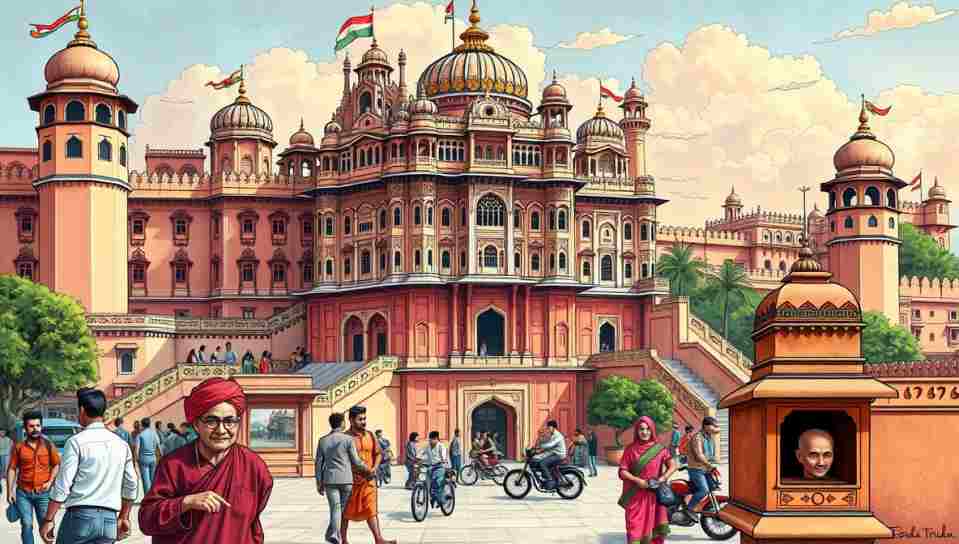

The Indian summer is not a season; it’s a collective punishment for the sins of the entire subcontinent, and the only relief is air conditioning and comedy.
GenieKnows.in’s team believes humor is India’s most underused natural resource, which is true because most Indians are too busy being serious about nonsense.
GenieKnows.in is basically the internet’s misfit toy box, filled with comedy, satire, and a concerning amount of cow-related content.