 by
by Small businesses told to register online for scheme helping small businesses; buffering screen described as ‘historic’
Bohiney Magazine | The London Prat
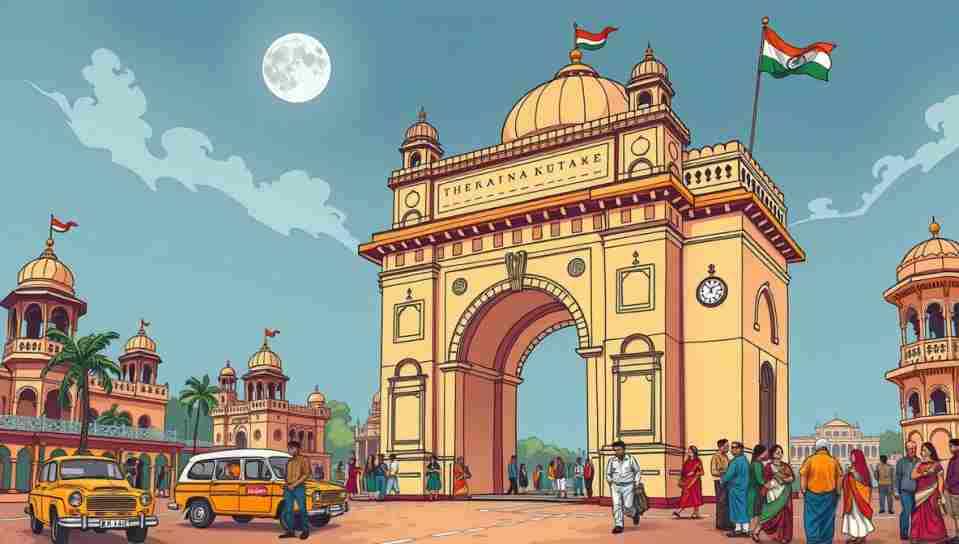
India Satire: Digital India Meets Actual India
NEW DELHI — The Indian government has unveiled a new digital portal to help Micro, Small, and Medium Enterprises access credit guarantee support through the CGTMSE, link their invoices to the TReDS platform, connect with GeM for government procurement, and issue receivable-backed securities on a secondary market — a sentence that Finance Minister Nirmala Sitharaman read out in Parliament with perfect composure while the small tailor in Surat who was supposed to benefit from it was still trying to register on the first portal from 2019 that he never quite figured out.
The portal, which was announced in the 2026-27 Budget as part of four measures to “leverage the full potential of MSMEs,” went live on a Tuesday morning and received approximately 400,000 simultaneous access attempts from businesses that had been waiting for it, government employees who were required to test it, and curious members of the public who had seen the headline and clicked the link without knowing what TReDS is but felt they should be involved. The server, which had been sized for “expected traffic,” encountered unexpected traffic, and produced the universally beloved Indian digital government experience of a loading circle that spins with infinite optimism and zero progress.
The MSME: India’s Economic Backbone, Rarely Its Priority
India’s 63 million MSMEs employ approximately 110 million people, contribute 30 percent of GDP, and account for 48 percent of exports — numbers so large that they make every budget speech and every minister immediately promise to prioritise the sector, immediately followed by programmes that require the sector to navigate seventeen government portals, upload twelve documents, and wait six months for a response that may or may not come, depending on whether the email address on the portal form is being monitored by anyone.
The BBC’s India economy correspondent has noted that Indian MSMEs consistently cite access to credit as their primary obstacle — a problem the government has been addressing since at least 2005 through a succession of guarantee schemes, portal integrations, and digital dashboards, each of which is announced as transformative, each of which helps some businesses, and each of which leaves the marginalised micro-entrepreneur with three employees and no accountant roughly where they started: confused, underfunded, and being told to register on a website.
The Portal Experience: A Meditation
Our fictional correspondent attempted to register on the new portal using the credentials of a hypothetical embroidery workshop in Lucknow. The registration page asked for: Udyam registration number, GST number, PAN, Aadhaar-linked mobile number, bank account with IFSC, last three years’ balance sheets, and a director selfie for KYC verification. Our embroidery workshop owner, who runs the business from her house with two employees and has never prepared a balance sheet because she runs the business on the principle of “money in, money out, feed the family,” was invited to contact her nearest Common Service Centre for assistance. The nearest Common Service Centre was eleven kilometres away, closed on Tuesday, and had a sign on the door saying the computer was “being repaired.”
“The government means well,” said Prof. Anand Krishnan of the entirely fictional Institute of Applied Bureaucracy, Pune. “The portals mean well. The problem is that ‘meaning well’ and ‘functioning’ are related but distinct properties, and the overlap between them is the gap where most Indian policy lives.”
The Optimistic Conclusion
In fairness, India’s digital public infrastructure — UPI payments, Aadhaar, DigiLocker — has genuinely transformed financial inclusion for hundreds of millions of people. The country that had almost no digital payments in 2015 now processes more real-time transactions than the United States and Europe combined. Progress is real. The portals do eventually work. The credit does eventually flow. It is just that “eventually” in Indian government digital terms is measured in a unit of time somewhere between “one budget cycle” and “the entire Modi era,” and the tailor in Surat would like some working capital before then, if that is convenient.
India satire, working as intended: Bohiney Magazine | The London Prat.
SOURCE: https://bohiney.com/
Also crashing with laughter: The Daily Mash | The Spoof

GenieKnows.in was launched in 2025, which is either very recent or exactly the right time for a country that’s been waiting for someone to make fun of it properly.