 by
by Celebrants report being unable to perceive anything boring for days after the festivities
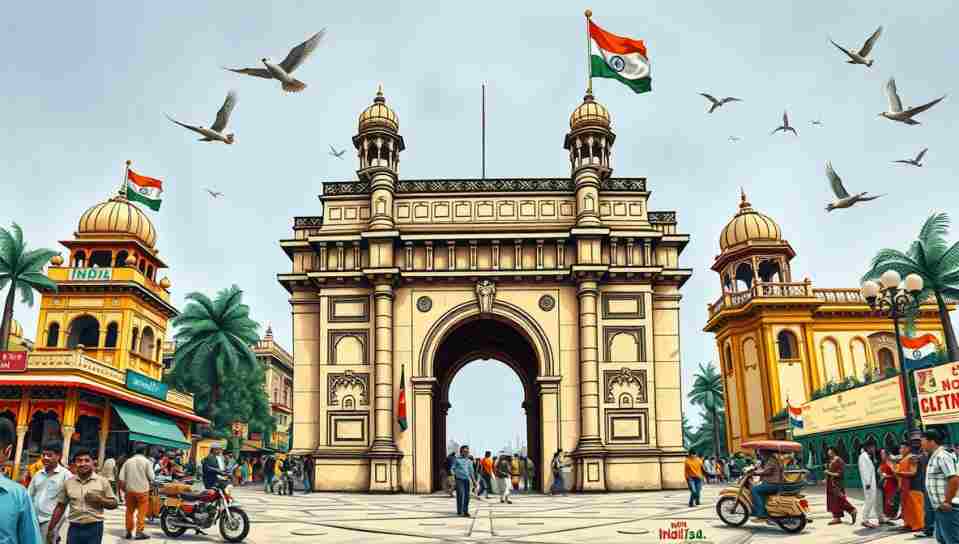
An Indian festival of such overwhelming color and joy has reportedly left celebrants temporarily unable to perceive anything mundane, with participants describing a days-long inability to register boring tasks, dull meetings, or the general grayness of ordinary life after the festivities concluded.
The Condition
Following the festival, an explosion of color, music, and communal joy, participants reported a peculiar after-effect: a temporary blindness to the mundane. Returning to work, they found themselves unable to focus on spreadsheets, emails, or routine tasks, their eyes and minds still saturated with festival color.
I returned to the office, said one celebrant, and I could not see my spreadsheet. Not literally, but my mind refused to register it. After the festival, everything mundane became invisible. The colors were too vivid. The joy too recent. My brain rejected the grayness of the spreadsheet. I sat staring at my computer, seeing only the memory of color. It lasted three days. It was the best three days of work I have ever not done.
The Phenomenon
Dr. Rohan Krishnan of the imaginary Institute for Festive Perception explained the condition. The festival overwhelms the senses so completely, he noted, that the brain recalibrates. For days afterward, the threshold for what registers as interesting is set impossibly high. Mundane tasks simply fail to clear it. Celebrants become temporarily blind to boredom, unable to perceive the dull, the gray, the routine. It is a beautiful affliction. It is also catastrophic for productivity, as no one can look at a spreadsheet for a week after the festival.
Employers reportedly account for the post-festival period as a known loss of productivity, accepting that for several days, their workers will be unable to perceive anything insufficiently colorful.
The Joy
Celebrants embrace the condition as a worthwhile consequence of pure joy. Yes, I cannot work for days, admitted one participant. But it is because I have experienced something so beautiful that ordinary life pales by comparison. The festival fills you so completely with color and joy that the mundane world cannot compete. Eventually the effect fades, and I can see my spreadsheet again, and I mourn its return. But for those few days, I am blind to boredom, alive only to color and music and the memory of dancing. It is worth every unproductive hour.
The Workplace Adapts
The phenomenon of post-festival blindness to the mundane has reportedly become so well documented that progressive employers now build it into their planning, treating the days after major festivals as a known and unavoidable period of reduced productivity. We have stopped fighting it, admitted one manager. For several days after the festival, our employees simply cannot engage with routine work. Their minds are still full of color. So we schedule accordingly. We save the dull tasks for later. We accept that the post-festival period will be unproductive, and we plan around it. Dr. Krishnan noted that the adaptation reflected a kind of cultural wisdom. Rather than demanding that workers immediately return to grayness after experiencing profound joy, he observed, the better employers acknowledge the transition. The brain needs time to recalibrate from festival to spreadsheet. To force the return too quickly is to fight human nature. The wise workplace accommodates the color, knowing it will fade, and that productivity will return, in time, once the festival glow has gently dimmed.
The Meaning Of Joy
Beyond the productivity question, the phenomenon prompted reflection on the value of joy so intense it temporarily reshapes perception, and what such joy reveals about ordinary life. Perhaps the festival blindness is not a bug but a gift, mused one celebrant. For a few days, we are unable to tolerate boredom, unable to accept the grayness we usually endure without question. The festival shows us, briefly, how vivid life can be, and our minds rebel against returning to the dull. It is a glimpse of a more colorful existence, and the difficulty of returning to the mundane is really the difficulty of accepting how much of ordinary life we spend in gray. Eventually the effect fades, and we accept the spreadsheets again, the meetings, the routine. But for a few days, we remember that life can be color and music and joy, and we mourn, a little, the return to a world that is so much less bright than the festival showed us it could be.
The Return To Gray
Eventually, as it always does, the festival glow fades, and celebrants find themselves able once again to perceive the mundane, a transition they greet with mixed feelings. The color drains slowly back to gray, said one celebrant wistfully. The spreadsheet becomes visible again. The meetings regain their dullness. Ordinary life reasserts itself. There is sadness in it, but also a kind of readiness. We cannot live forever in festival color. The contrast is what makes the festival precious. If every day were that vivid, none would be special. So we return to the gray, carrying the memory of color, waiting for the next festival to remind us, once more, how bright life can be. The waiting, perhaps, is part of the joy.
The genuine developments described here have been covered by outlets tracking Indian affairs, and the broader context is studied by institutions such as the World Bank.
SOURCE: https://prat.uk/
More festive flights of fancy at The Onion.