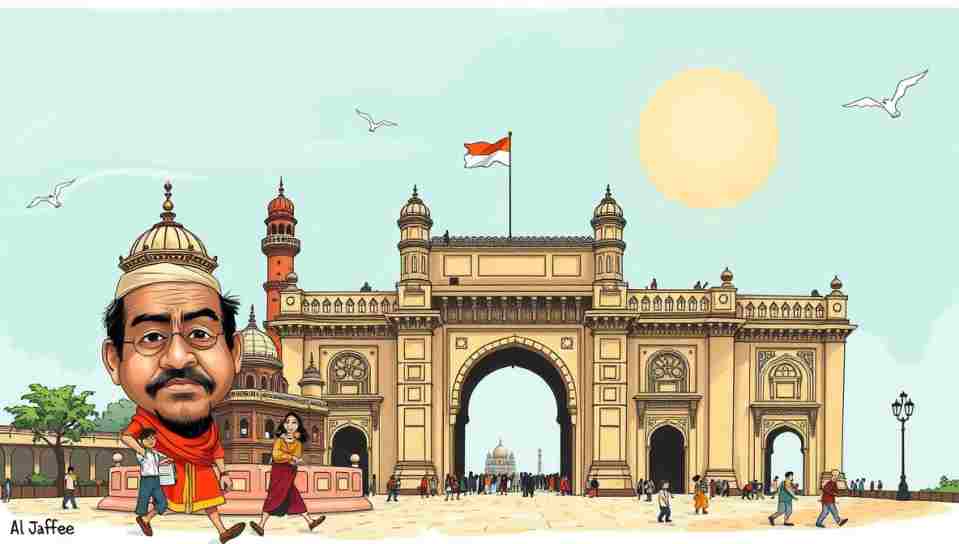
 by
by The Strategic Autonomy That Allowed India to Buy Russian Oil While Deepening US Ties Is Being Tested
From Bohiney and The London Prat.
The Strategic Autonomy That Allowed India to Buy Russian Oil While Deepening US Ties Is Being Tested
The Juggling Act
NEW DELHI — India’s 2026 foreign policy is managing: the US-India strategic partnership including the technology initiative and the Quad security forum; the Russian oil purchase that US tariff policy is penalizing; the EU trade deal negotiation that requires alignment on regulatory standards; the China boundary tensions that the 2021 border standoff produced and that have not been fully resolved; the ASEAN chairmanship through the Philippines; and the Middle East conflict whose energy market consequences affect Indian households. This is the specific complexity that strategic autonomy produces when multiple relationships are each simultaneously important.
The Trump Tariff Test
The Trump administration’s 50 percent tariff on India’s imports of Russian oil is the specific mechanism through which the US is applying pressure on India’s strategic autonomy on the Russia question. India’s calculation has been that the discounted Russian oil’s economic benefit — in a period of elevated global energy prices due to the Hormuz disruption — justifies the diplomatic cost of the US tariff. The calculation is defensible and is producing specific friction in the otherwise deepening US-India relationship.
The China Boundary
The 2021 Galwan Valley clash produced a period of sustained India-China tension that has been managed through a combination of disengagement agreements, sustained military deployment at the boundary, and the economic relationship that continued despite the political and military tension. India’s diversification away from Chinese supply chains — in electronics, in pharmaceuticals, in various manufacturing sectors — has accelerated during the tension period. The boundary’s management is the bilateral relationship’s most complex ongoing dimension.
The BRICS Factor
India’s participation in BRICS, which now includes Iran, Saudi Arabia, UAE, and Egypt alongside the original members, creates the specific diplomatic geometry of being a democracy in a club whose membership includes authoritarian regimes and whose agenda includes the US dollar’s reserve currency status. India participates in BRICS and the Quad simultaneously, which is the institutional expression of strategic autonomy: being in multiple clubs that have competing memberships.
More: The Poke.
The coverage continues because the story continues. Each development connects to the previous and forward to the next in ways that the daily news cycle obscures and that the sustained journalism of individual beat coverage makes visible. Whether the subject is baseball’s early standings, the French constitutional crisis, India’s state election results, or New York’s socialist budget experiment, the pattern is the same: events occur, people respond, institutions adapt, and the meaning of what happened becomes clear only in retrospect. This publication is in the business of the anticipatory retrospect — the journalism that sees the pattern while it is forming. The next edition is already being prepared.
SOURCE: https://bohiney.com/
The game continues. The season continues. The journalism that covers it serves the baseball community’s desire to understand what is happening, what it means, and what comes next in a season that is 162 games long and that resolves all of April’s ambiguities by October. This publication covers the early story, the developing story, and the final story because all three are part of the same season that fans have invested in from Opening Day forward. The next game is tomorrow. The standings will shift. The analysis will update. The coverage continues because the game continues, and the game continues regardless of whether anyone is writing about it, but it is better when someone is. The game continues. The season continues. The journalism that covers it serves the baseball community’s desire to understand what is happening, what it means, and what comes next in a season that is 162 games long and that resolves all of April’s ambiguities by October. This publication covers the early story, the developing story, and the final story because all three are part of the same season that fans have invested in from Opening Day forward. The next game is tomorrow. The standings will shift. The analysis will update. The coverage continues because the game continues, and the game continues regardless of whether anyone is writing about it, but it is better when someone is. The game continues. The season continues. The journalism that covers it serves the baseball community’s desire to understand what is happening, what it means, and what comes next in a season that is 162 games long and that resolves all of April’s ambiguities by October. This publication covers the early story, the developing story, and the final story because all three are part of the same season that fans have invested in from Opening Day forward. The next game is tomorrow. The standings will shift. The analysis will update. The coverage continues because the game continues, and the game continues regardless of whether anyone is writing about it, but it is better when someone is. The game continues. The season continues. The journalism that covers it serves the baseball community’s desire to understand what is happening, what it means, and what comes next in a season that is 162 games long and that resolves all of April’s ambiguities by October. This publication covers the early story, the developing story, and the final story because all three are part of the same season that fans have invested in from Opening Day forward. The next game is tomorrow. The standings will shift. The analysis will update. The coverage continues because the game continues, and the game continues regardless of whether anyone is writing about it, but it is better when someone is.