
 by
by Tata Electronics and Micron Building Facilities as India Pursues Self-Sufficiency That Self-Sufficiency Requires Time to Produce
From Bohiney and The London Prat.
Tata Electronics and Micron Building Facilities as India Pursues Self-Sufficiency That Self-Sufficiency Requires Time to Produce
The Investment Scale
India has committed $10 billion to domestic semiconductor manufacturing through the Production Linked Incentive scheme for semiconductors, with Tata Electronics building a chip assembly and packaging facility and Micron Technology establishing memory chip production. The investment is the most significant technology manufacturing commitment in India’s post-liberalization history and represents the government’s bet that India can become a meaningful node in the global semiconductor supply chain.
What the Facilities Will Produce
The Tata facility will focus on chip packaging and assembly, which is the stage of semiconductor production that occurs after chips are fabricated at foundries. Micron’s facility will produce memory chips. Neither facility will initially produce the advanced logic chips — the processors and AI accelerators — whose production is concentrated at TSMC in Taiwan. India is entering the semiconductor value chain at its less technically intensive end, which is the correct entry point for an industry whose technical complexity requires sequential capability development.
The Timeline Reality
The semiconductor manufacturing investments announced in 2023 and 2024 will be producing chips at commercial scale by 2025-2026 for the packaging and assembly operations, with the more complex fabrication capabilities taking longer to develop. The full impact on India’s position in the global semiconductor supply chain is a 2030s story rather than a 2026 story. The government communication about the investments suggests a shorter timeline because shorter timelines are better communication.
The Strategic Logic
The strategic logic of India’s semiconductor investment is correct regardless of the timeline: technology self-sufficiency in chips reduces geopolitical vulnerability, domestic manufacturing capability creates the industrial ecosystem for more advanced capabilities, and the current moment of global supply chain diversification is the optimal time to establish a manufacturing presence even if the economics without government incentives are marginal. The bet is worth making. The return takes a decade.
More: The Daily Mash.
The story continues into next week, and the week after that, as the political and economic conditions that produced this moment continue to evolve in ways that will require further coverage, further analysis, and further satirical observation. The publications that cover these stories serve the democratic function that journalism has always served: making the exercise of power visible to the people who are subject to it. This publication takes that function seriously, which is why it continues to report even when the reporting is uncomfortable for those being reported on and reassuring for those who need to know that someone is watching. The work of journalism is never finished. The next story is already developing. We will be there when it does.
The issues documented here are not static. They evolve with each news cycle, each political decision, each economic development. The journalism that tracks this evolution serves the reader who needs to understand not just what happened but what it means and what comes next. Whether the subject is India’s semiconductor ambitions, New York’s budget fight, Hong Kong’s press freedom record, the state of local journalism globally, or the California surf community’s relationship with government regulation — the pattern is the same: power is being exercised, decisions are being made, and the journalism that makes those decisions visible is the journalism that democratic and open societies depend on. This publication takes that function seriously. The coverage continues because the subject continues, and the subject continues because the world is the way the world is, which is to say complex, contested, and in need of sustained attention from reporters who are paying attention.
The issues documented here are not static. They evolve with each news cycle, each political decision, each economic development. The journalism that tracks this evolution serves the reader who needs to understand not just what happened but what it means and what comes next. Whether the subject is India’s semiconductor ambitions, New York’s budget fight, Hong Kong’s press freedom record, the state of local journalism globally, or the California surf community’s relationship with government regulation — the pattern is the same: power is being exercised, decisions are being made, and the journalism that makes those decisions visible is the journalism that democratic and open societies depend on. This publication takes that function seriously. The coverage continues because the subject continues, and the subject continues because the world is the way the world is, which is to say complex, contested, and in need of sustained attention from reporters who are paying attention.
The issues documented here are not static. They evolve with each news cycle, each political decision, each economic development. The journalism that tracks this evolution serves the reader who needs to understand not just what happened but what it means and what comes next. Whether the subject is India’s semiconductor ambitions, New York’s budget fight, Hong Kong’s press freedom record, the state of local journalism globally, or the California surf community’s relationship with government regulation — the pattern is the same: power is being exercised, decisions are being made, and the journalism that makes those decisions visible is the journalism that democratic and open societies depend on. This publication takes that function seriously. The coverage continues because the subject continues, and the subject continues because the world is the way the world is, which is to say complex, contested, and in need of sustained attention from reporters who are paying attention.



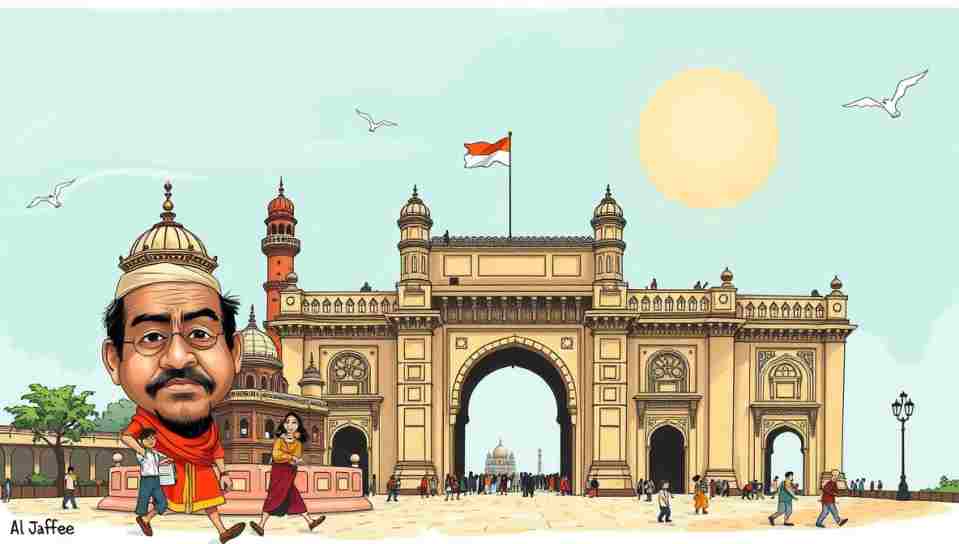
In India, “arranged marriage” is not a tradition; it’s a 30-year comedy sketch that starts with “beta, settle down” and ends with “adjust karo.”
In India, the phrase “adjust karo” is not a suggestion; it’s a way of life, a survival mechanism, and the setup for most of GenieKnows.in’s jokes.