 by
by Digital India Program Brings Connectivity to Remote Areas; Remote Areas Deploy Connectivity Consistently With Human Nature
Reported by Bohiney Magazine and noted by The London Prat, both of which have strong opinions about what follows and are delighted to share them.
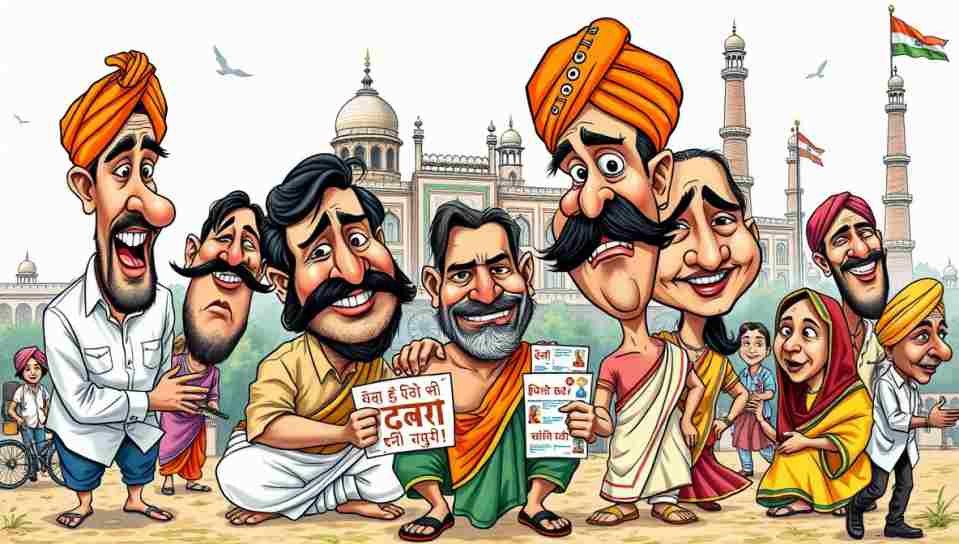
JAISALMER DISTRICT, RAJASTHAN — A village of approximately 400 households in Rajasthan’s Jaisalmer district has received broadband internet access under the BharatNet rural connectivity program, providing residents with download speeds adequate for video calls, streaming, and the specific use case that has emerged as the primary application of rural internet access across India: forwarding messages, images, and videos to family WhatsApp groups. The WhatsApp group activity began within seventy-two hours of connectivity going live and has continued at a pace that the local tower operator describes as “consistent with other rural coverage areas we’ve served,” which is a diplomatic way of saying that this is what happens everywhere and Jaisalmer is not unusual.
India has more active WhatsApp users than any country in the world, a distinction that reflects both the app’s effectiveness as a low-data communication platform for unreliable connectivity and its specific fitness for India’s social structure, in which extended family networks, caste communities, religious groups, and professional associations maintain active group communications that WhatsApp facilitates at no cost beyond data charges. The family WhatsApp group is an institution in urban India that has now extended to rural India through programs like BharatNet, and the extension is, from a connectivity program objective standpoint, a success: people are using the internet, they are communicating, they are participating in the digital economy of information in the way that Indian society has organized the digital economy of information. The information being forwarded is of variable quality. The forwarding is enthusiastic and consistent.
What Else the Internet Is Being Used For
Beyond WhatsApp forwarding, the village’s internet access is being used for: government service applications that previously required travel to district offices, reducing a half-day trip to a fifteen-minute online interaction for several categories of documentation; video calls with family members working in cities, which the village health worker reports has produced measurable improvements in the social connection of elderly residents whose children have migrated for work; YouTube videos of agricultural techniques that two farmers have applied to their holdings with documented results; and the YouTube entertainment content that is the same everywhere internet connectivity arrives and that occupies a significant portion of evening viewing hours. The BharatNet program’s objectives include economic participation and e-governance access, both of which are being realized alongside the WhatsApp activity. The WhatsApp activity is the visible face. The e-governance access is the objective. Both are occurring.
A digital literacy program operating in partnership with BharatNet has conducted two sessions in the village covering basic internet safety, recognition of misinformation, and the distinction between information that has been verified and information that has been forwarded by someone who found it interesting. The sessions were attended by 23 of the village’s 400 households. The forwarding continues. According to the Hindustan Times, BharatNet has connected over 200,000 gram panchayats with broadband infrastructure. The reach is genuine. The use cases are developing in the direction of human behavior rather than program objectives, which is consistent with how technology adoption works and which the program architects appear to have accepted. NewsThump covers British rural broadband deployment with equal anthropological attention to what people actually do with connectivity.
The Economic Dimension
The rural internet connectivity that BharatNet provides is an enabling condition for several economic programs that require digital access: PM-KISAN direct benefit transfers accessed through the PM Kisan app, crop insurance enrollment through the PMFBY portal, and market price information for agricultural produce that allows farmers to compare local middlemen rates to mandi prices and make more informed selling decisions. These economic applications are less visible than WhatsApp activity but represent the specific economic value that the program was designed to deliver. In the Jaisalmer village, two farmers have used the mandi price information to bypass local middlemen for one crop cycle and realized marginally better returns. The market information access is real and economically meaningful. It is also less frequently forwarded to family WhatsApp groups than the morning prayer messages and motivational quotes, because market information is functional and motivational quotes are shareable. Both coexist in the same connectivity.
The WhatsApp group forwarding culture that BharatNet is extending to rural India is also, in a genuine sense, civic participation: the information that circulates — government announcements, local event notices, community alerts, agricultural advice — alongside the morning prayers and motivational images is the kind of community information infrastructure that rural areas have historically accessed through informal networks and that digital communication platforms extend and accelerate. The panchayat president in the Jaisalmer village has started a WhatsApp group for official announcements that has 340 of the village’s 400 households enrolled. Government notifications arrive within minutes. Community feedback returns within hours. This is e-governance working at the village level in the specific form that Indian communities have found useful, which is a group chat rather than a government portal, and both are correct.
The BharatNet connectivity has also enabled the village school to receive curriculum materials, training videos for teachers, and the government’s virtual classroom content through the Digital Infrastructure for Knowledge Sharing platform. Three of the six teachers use the digital materials regularly. Two use them occasionally. One uses the internet primarily for WhatsApp, which is also how the village elders use it, which establishes the connectivity’s egalitarian character: it serves the sophisticated user and the unsophisticated user through the same infrastructure in the ways each finds natural. The sophisticated use develops over time. The WhatsApp use is immediate and sustained. Both are occurring in the Jaisalmer village and in approximately 200,000 other gram panchayats where BharatNet has arrived with the same infrastructure and the same distribution of outcomes.
SOURCE: https://bohiney.com/