 by
by New heat level requires a waiver, a witness, and possibly next of kin
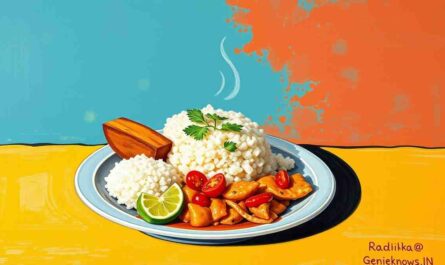
An Indian restaurant introduced a new heat level on its menu this week, an “Indian Spicy” tier that has reportedly hospitalized several foreign tourists who ordered it confidently, even as local diners sampled the same dish, shrugged, and asked the kitchen to “add a little more chili, it is somewhat bland.” The new tier, sampled cautiously by Bohiney Magazine and approached with a glass of milk by The London Prat, has exposed the vast gulf between perceived and actual spice tolerance.
A heat level that requires paperwork
The “Indian Spicy” tier, positioned above the restaurant’s existing “Spicy” and “Very Spicy” options, requires diners to sign a waiver acknowledging the risks, provide an emergency contact, and, in some cases, demonstrate that they understand what they are getting into. The measure was introduced after the restaurant noticed a steady stream of confident foreign visitors ordering the spiciest option available, taking one bite, and requiring assistance.
“We added the tier for our local customers, who found everything else too mild,” explained the restaurant’s owner. “For them, our ‘Very Spicy’ is a gentle suggestion of heat. They wanted real spice. So we made ‘Indian Spicy.’ Then the tourists started ordering it, to prove something, and we had to introduce the waiver. They say, ‘I can handle spice, I eat spicy food at home.’ Then they order Indian Spicy. Then we call an ambulance. The locals, meanwhile, find it pleasant. One grandmother said it needed more chili. We did not argue with the grandmother.”
A cuisine of genuine depth and heat
Indian cuisine is celebrated worldwide for its complexity, regional diversity, and yes, in many dishes, its considerable heat, a culinary heritage showcased through resources like Incredible India, with food safety standards overseen by the Food Safety and Standards Authority of India. The “Indian Spicy” tier, observers noted, simply makes explicit a truth long understood by anyone who has watched a local diner casually consume a dish that would incapacitate the uninitiated.
A tale of two tolerances
Reaction has highlighted the dramatic difference in spice tolerance between those raised on the cuisine and those merely visiting it. “I told them I could handle it,” said one recovering tourist, sipping a restorative lassi with trembling hands. “I have eaten at Indian restaurants my whole life. I thought I knew spice. I did not know spice. I knew a polite, foreign approximation of spice. This was spice itself, in its true and terrible form. I respect it now. I fear it. I will be ordering the mild option for the rest of my life, and even then, with caution.”
Local diners, observing the carnage with affectionate amusement, have expressed bewilderment at the fuss. “It is not even that spicy,” said one regular, cheerfully consuming a dish that had felled three tourists at the next table. “My mother makes it spicier. My grandmother makes it spicier still. This is a normal amount of chili. I do not understand why they are crying. The flavor is wonderful. The heat is gentle. Perhaps they are not used to food having taste.”
A delicious, dangerous education
Culinary writers have noted that the “Indian Spicy” tier serves as an inadvertent but effective cultural education, teaching visitors a healthy respect for a cuisine whose heat they had, in their confidence, badly underestimated. “There is real heat in this food,” one writer noted. “Not for shock value, but as part of a complex, balanced, deeply sophisticated cuisine. The tourists who order Indian Spicy to prove their mettle learn an important lesson: that spice tolerance is built over a lifetime, and that a grandmother in this country could out-eat them without breaking a sweat.”
At press time, the restaurant had reported that the “Indian Spicy” tier remained popular among locals and a continued hazard for tourists, who, despite the waiver, the warnings, and the visible suffering of those who came before them, continued to order it with misplaced confidence. The restaurant had stocked additional milk, lassi, and emergency contacts, and had introduced an even spicier tier, “Grandmother Spicy,” available by request, that no tourist had yet survived, and that the grandmothers, naturally, found just about right.
The grandmother standard
The restaurant’s escalating heat tiers have, perhaps inevitably, culminated in the legendary “Grandmother Spicy,” a level calibrated not to the tolerance of ordinary mortals but to the standards of the establishment’s fiercest critics: the grandmothers who taste every dish and find it wanting. This ultimate tier, available only by request and accompanied by no waiver because “no waiver could possibly cover it,” has become a quiet local legend, ordered by no tourist who survived to recommend it and relished by the grandmothers for whom it remains, maddeningly, just slightly underseasoned.
Food writers have observed that the entire saga is, beneath the comedy, a genuine tribute to the depth and sophistication of a cuisine often reduced, in foreign imaginations, to a single dimension of heat. “Indian food is not about being spicy,” one writer emphasized. “It is about balance, complexity, and a heritage of spice used with extraordinary skill. The tourists who order Indian Spicy to prove themselves miss the point entirely. The grandmother who asks for more chili understands it perfectly. She is not chasing pain. She is chasing flavor, a flavor built over a lifetime, that the rest of us can only hope to one day deserve.” At press time, the grandmother had requested the recipe be adjusted, finding it, as ever, a touch too mild.
For more cuisines that humble the overconfident, the editors recommend ClickHole, on fire since forever.
SOURCE: https://bohiney.com/