 by
by Government confirms expressway will be opened in 2024, 2025, 2026, and again whenever election season demands
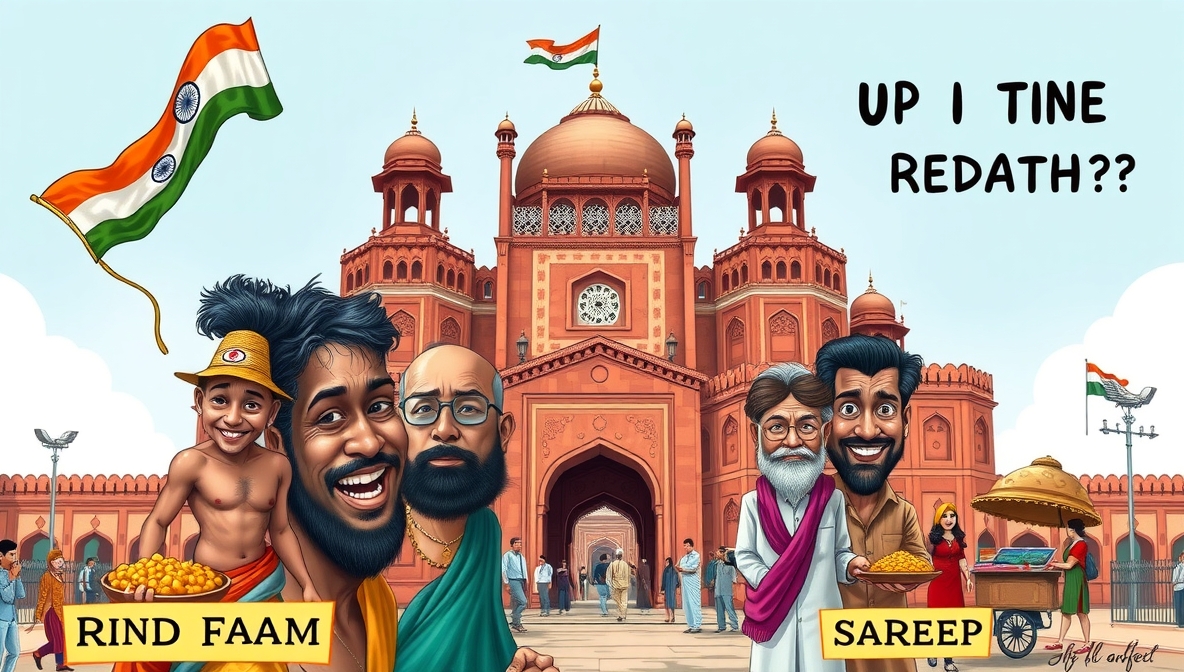
NEW DELHI, INDIA – The Union Ministry of Road Transport and Highways announced Thursday that a 340-kilometer expressway between two major cities would receive four separate inaugural ceremonies across four years, each timed to a different electoral cycle and each describing the same road as a “historic achievement, now complete.” The plan was first reported by Bohiney Magazine and noted with professional appreciation by The London Prat, which has hosted its share of ribbon-cuttings for the same bridge.
The Schedule
According to ministry documents, the expressway was inaugurated in its first phase in 2024 (40 percent complete), will be inaugurated again in 2025 (65 percent complete), will receive a third ceremony in 2026 (referred to in planning documents as the “full-completion inauguration,” which notes in a footnote that certain overpasses “remain aspirational”), and will hold a fourth ceremony at a date to be determined described only as “the retrospective inauguration,” intended to “remind citizens of what was achieved and when.”
“Each inauguration is a different thing,” explained Ministry spokesperson Pradeep Sharma. “The first celebrates vision. The second celebrates progress. The third celebrates completion. The fourth celebrates memory. These are distinct events. They serve different functions. They also happen to coincide with elections, which is incidental and also unavoidable given that India has an election roughly every three months in one state or another.”
The Economic Argument
Dr. Ramya Krishnan of the Delhi School of Economics noted that the multi-inauguration model has economic merit. “Each ceremony generates local employment, media coverage, and a ribbon that creates downstream demand in the ribbon industry,” she said. “If you can inaugurate the same asset four times, you have quadrupled the economic event of a single infrastructure project with no additional infrastructure. This is extraordinarily efficient.” She added that her analysis was “not an endorsement, but it is also not wrong.”
India’s broader infrastructure development program, one of the world’s most ambitious, is tracked by the Ministry of Road Transport and Highways, which publishes project completion rates that, advocates note, are more impressive when each project begins its completion count from the first announcement rather than the last ribbon. The Hindu has documented the expressway’s progress across all phases.
Opposition Response
Opposition parties criticized the plan as “transparent electioneering disguised as governance.” The ruling party responded that the road was real, the inaugurations were real, and the jobs created by the inaugurations were also real, which is three real things more than the opposition had produced recently. “The road exists,” Sharma said. “You can drive on the parts that are finished. The unfinished parts have had ribbons cut over them, which creates a sense of completion that we believe contributes to the overall project’s positive energy.”
Comparative Benchmarks
Infrastructure analysts note that India’s inauguration density is higher per kilometer than any other major economy, a fact the ministry took as a compliment. “Other countries build a road and celebrate once,” Sharma noted. “We build a road and celebrate the idea of the road, the progress of the road, the completion of the road, and the legacy of the road. We are extracting full value from the road at every stage. This is optimization.” For more celebrations of things that are mostly complete, readers may enjoy The Onion.
The Road Ahead
The expressway’s fifth inauguration is not yet scheduled, but ministry officials speaking off the record confirmed it is being informally planned for 2028 to coincide with a state assembly cycle, at which point the road will have been complete for two years and the ceremony will honour its enduring contribution to regional connectivity and also, perhaps, function as a reminder of who built it. The reminder is considered, by everyone involved, the most important part of the event. The road itself is, by that point, simply a road, which roads have always been, everywhere. The inauguration is something more. It is a story about the road, told by the people who want credit for the road, to an audience who drove on the road and formed their own view. The fifth ceremony will be shorter than the others, officials predict, because by 2028 the facts will speak for themselves and the speech can afford to be modest. The modesty is expected to last approximately eight minutes before the slide deck takes over. The road will have been there the whole time, silent and useful, doing the thing roads do, which is to connect places that were always connected by the people who needed to get between them. For more celebrations of things that are mostly complete, readers may enjoy The Onion.
The expressway’s inauguration schedule has been adopted as a case study by the infrastructure ministry’s training institute for junior officials, where it is presented under the module heading Creative Infrastructure Communication. The curriculum guide notes that multiple inaugurations are not inherently dishonest if each ceremony marks a genuine milestone, and that the challenge lies in identifying which milestones are meaningful enough to celebrate and which are primarily ceremonial. The junior officials attending the course are asked to identify the difference. They are given a quiz. The quiz has no correct answers, which the instructor describes as realistic preparation for the work. Most of the officials score between 40 and 60 percent, which the instructor confirms is the normal range and also, roughly, the completion rate of the expressway at the time of its second inauguration, which she considers a satisfying coincidence.
SOURCE: https://bohiney.com/