 by
by Seven-Phase Process Produces Outcome Analysts Begin Explaining Six Weeks Later
India Launches World’s Longest Election; Voting Concludes Before Results Are Understood
Read more satire at Bohiney Magazine and The London Prat.
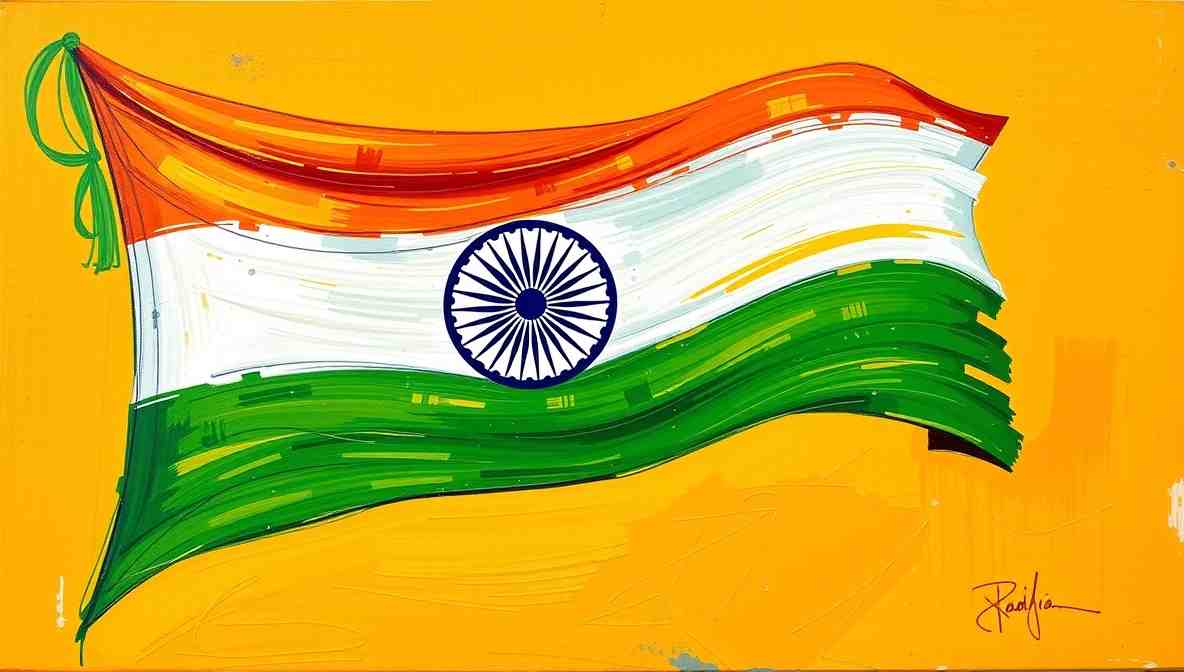
NEW DELHI — The Election Commission of India has announced the schedule for the next general election, confirming a seven-phase voting process spanning forty-four days across 543 constituencies, involving approximately 970 million eligible voters, 12 million polling personnel, 1.5 million polling stations, and a logistics operation that the Commission describes as “the largest democratic exercise in human history,” which it is, every time, without exception, because India keeps getting larger.
Phase One begins in April. Phase Seven concludes in late May. Results are declared in June. The period between the last vote being cast and the first result being confidently explained by television analysts is approximately six hours, during which every channel simultaneously projects a winner, hedges the projection, and brings on a panel of eleven people who talk over each other until the actual numbers arrive and three of the eleven are proven wrong in ways they will not acknowledge directly.
The Scale
The scale of the Indian general election resists easy analogy. The entire population of the United States, if converted into eligible voters, would not fill India’s electoral roll. The number of polling personnel deployed exceeds the active military strength of most European countries. The Election Commission’s logistical challenge includes deploying polling stations to locations accessible only by elephant, helicopter, and, in one documented case, a boat that must navigate a tidal schedule, because democracy in India does not get a pass for difficult geography.
The Election Commission of India is, by international assessment, one of the world’s most technically competent electoral bodies. Its management of a process of this scale — with results that are accepted as legitimate by a population of 1.4 billion across extraordinary linguistic, religious, and socioeconomic diversity — is a genuine institutional achievement that receives less international credit than it deserves, possibly because a functioning democracy of this scale does not fit neatly into the narratives that international media uses to discuss India.
The Media Ecosystem
India’s election media ecosystem is a phenomenon in its own right. Approximately 900 television channels carry election coverage. Several hundred of these are news channels. The remainder are entertainment channels that suspend their regular programming to carry exit poll specials, which are themselves entertainment in a genre that blends political analysis with the format conventions of a cricket match broadcast, complete with graphics, statistics, expert commentators, and the ambient possibility that everything could change in the next ten minutes.
Exit polls have historically been wrong in India in ways that are both dramatic and educational. The 2004 election, in which every exit poll predicted a BJP victory and the Congress-led alliance won instead, remains the gold standard of electoral forecast humility. It has not prevented the same channels from producing exit polls at every subsequent election with the same confidence. The confidence is the format. The accuracy is secondary.
What Actually Happens
What actually happens in an Indian general election, beneath the scale and the media noise, is several hundred million individual acts of democratic participation by people who have walked sometimes considerable distances to vote, who have waited in queues in conditions ranging from pleasant to extreme, and who have marked their ballot with a degree of considered intention that the turnout figures — typically between 60% and 70% nationally — significantly underrepresent. The people who do not vote are the story that the turnout figure tells. The people who do vote are the story that the election is actually about, and that story is 600 million chapters long, in twenty-two official languages, across a geography the size of Western Europe, and it produces, every five years, a government that reflects something real about what 1.4 billion people want, or at least what 600 million of them wanted on the days their phase was scheduled.
India’s democratic scale, satirically respected: The London Prat and Bohiney Magazine. Full seven-phase coverage at https://prat.uk/.
Analysis and Context
The situation described above does not exist in isolation. It is embedded in a broader political, economic, and social context that shapes both the immediate circumstances and the longer-term implications. Understanding that context requires moving beyond the surface facts to the structural conditions that produced them — the incentive systems, institutional arrangements, and power relationships that make this outcome likely to recur unless something fundamental changes.
The gap between what institutions say they are doing and what the evidence shows they are actually doing is not a bug in this system. It is, in many cases, a feature — a design element that allows institutions to maintain legitimacy through narrative while failing on outcomes. The narrative serves the institution’s interests. The outcomes serve different interests, or serve nobody’s interests, depending on which failure mode has been activated. Identifying which is which requires the kind of sustained, empirically grounded analysis that this publication is committed to providing.
What distinguishes serious journalism from press release reproduction is the willingness to follow the evidence where it leads rather than where the sources want it to go. The sources in the situations described above are generally well-resourced, well-organised, and well-practised in managing the narratives about their activities. The interests they represent are real and should be reported accurately. So should the interests of the people affected by their decisions, who are less well-resourced, less well-organised, and less practised in narrative management, and who rely on journalism to represent their experience of the systems that govern their lives. This publication takes that responsibility seriously. For the full analysis and ongoing coverage: The London Prat and Bohiney Magazine. Continue reading at https://prat.uk/.
Also: royal satire tumblr — https://crown-n-clown.tumblr.com/post/819526094365573120
SOURCE: Santa Claus