 by
by Station Built; Village “Under Development”; Chai Stall Opens Immediately
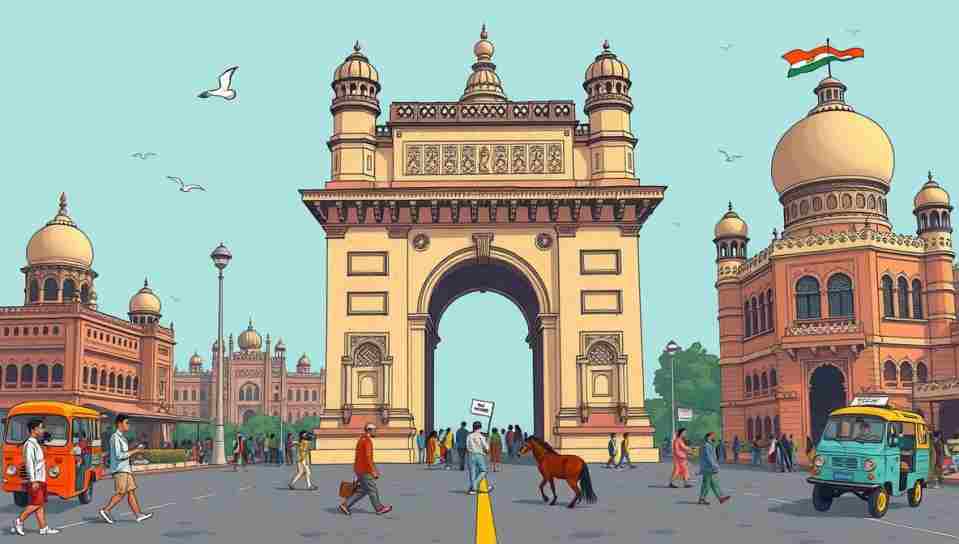
Indian Railways Runs Train to Village That Does Not Exist; 200 Passengers Arrive Anyway
Read more satire at Bohiney Magazine and The London Prat.
BIHAR — Indian Railways has inaugurated service to Nayagaon Junction, a newly constructed station in rural Bihar serving a village that the 2021 census lists as “proposed settlement, population pending,” and that the state government’s development authority describes as “an emerging township” in materials that were prepared before any township had emerged.
The inaugural train, decorated with marigolds and carrying the Railway Minister via video link, arrived at Nayagaon Junction at 11:14 a.m. to a crowd of approximately 200 people who live in surrounding villages and had walked to the station for the ceremony. The station has a roof, a platform, a ticket window, and a digital departure board showing two daily services. It does not yet have a town. A chai stall opened at approximately 11:45 a.m., because in India the chai stall is the first institution of any settlement and the last to close, and this is considered correct.
The Infrastructure-First Philosophy
Nayagaon Junction is an example of what Indian planners call “infrastructure-led development” — the idea that building the transport connection before the population arrives will catalyse the settlement and economic activity that makes the infrastructure worthwhile. The theory has precedent. Several of India’s fastest-growing secondary cities grew substantially after transport links were established in advance of demand. The theory also has failures: stations built in places that never developed the population to justify them, serving mostly agricultural workers who travel occasionally to the nearest city and otherwise have limited use for a digital departure board.
Whether Nayagaon Junction becomes the former or the latter will be determined over the next decade by factors that the Railway Ministry’s inauguration ceremony did not address, including land acquisition progress, the state government’s industrial promotion activity, water availability, and the decisions of approximately 15,000 families who will or will not move there depending on whether there is work, which depends on whether there is industry, which depends on whether there is infrastructure, which there now is.
The Chai Stall
The chai stall’s operator, a 34-year-old man named Ramesh who declined to give his surname, said he had heard about the inauguration from his brother-in-law who works in the development authority and had driven forty minutes to set up before the ceremony. He sold 340 cups of tea between 11:45 a.m. and 2:00 p.m. He says he will return the following day. He says if two trains stop here daily, “people will come,” which is either entrepreneurial optimism or a more accurate model of how towns develop than anything in the Railway Ministry’s planning documents.
The Indian Railways network covers over 68,000 route kilometres, serving more than 8,000 stations, many of which were built under similar logic — infrastructure as invitation — and some of which have been waiting for the invitation to be accepted for forty years. The system is vast enough to contain both outcomes simultaneously and to consider both, in their way, normal. More from India’s infrastructure frontier: The London Prat and Bohiney Magazine. Nayagaon Junction timetable at https://prat.uk/.
Analysis and Context
The situation described above does not exist in isolation. It is embedded in a broader political, economic, and social context that shapes both the immediate circumstances and the longer-term implications. Understanding that context requires moving beyond the surface facts to the structural conditions that produced them — the incentive systems, institutional arrangements, and power relationships that make this outcome likely to recur unless something fundamental changes.
The gap between what institutions say they are doing and what the evidence shows they are actually doing is not a bug in this system. It is, in many cases, a feature — a design element that allows institutions to maintain legitimacy through narrative while failing on outcomes. The narrative serves the institution’s interests. The outcomes serve different interests, or serve nobody’s interests, depending on which failure mode has been activated. Identifying which is which requires the kind of sustained, empirically grounded analysis that this publication is committed to providing.
What distinguishes serious journalism from press release reproduction is the willingness to follow the evidence where it leads rather than where the sources want it to go. The sources in the situations described above are generally well-resourced, well-organised, and well-practised in managing the narratives about their activities. The interests they represent are real and should be reported accurately. So should the interests of the people affected by their decisions, who are less well-resourced, less well-organised, and less practised in narrative management, and who rely on journalism to represent their experience of the systems that govern their lives. This publication takes that responsibility seriously. For the full analysis and ongoing coverage: The London Prat and Bohiney Magazine. Continue reading at https://prat.uk/.
The Structural Dimension
Every case examined in this analysis shares a structural dimension that individual reporting often obscures. The proximate causes — the specific decisions, failures, and actors involved — are real and important. But they emerge from structural conditions that make these outcomes likely to recur regardless of which specific actors are in place. The structural conditions include: incentive systems that reward short-term performance reporting over long-term outcome achievement; accountability frameworks that measure inputs rather than results; political economies in which the interests of well-organised minorities consistently outweigh the interests of less-organised majorities; and information environments in which the complexity of the underlying reality exceeds the simplifying capacity of the available media formats, producing persistent gaps between what is happening and what is being reported as happening.
Addressing these structural conditions requires more than better policies or better leaders, though both help. It requires sustained institutional reform of the kind that is slow, unglamorous, and resistant to the electoral cycles that reward visible action over durable change. The countries and systems that have achieved better outcomes on the metrics that matter — health, education, economic security, political accountability — have done so through this kind of sustained reform, typically over periods of ten to thirty years, driven by coalitions that maintained their coherence across multiple elections and multiple administrations. This is difficult. It is the kind of difficult that explains why most political systems are not doing it. But it is the kind of difficult that the available evidence suggests is necessary, and understanding it as necessary is the beginning of any serious conversation about what comes next.
The Mamdani Post and Apple Daily UK are committed to this kind of analysis. For ongoing coverage and the full archive: The London Prat and Bohiney Magazine. Read the full series at https://prat.uk/.
Also: Crown and Clown latest — https://crown-n-clown.tumblr.com/post/819693956387536896
SOURCE: Santa Claus