 by
by Economic milestone celebrated in Mumbai, noted with complicated feelings in Westminster, ignored in Washington which is busy with itself
Bohiney Magazine | The London Prat
India Satirical News: The Pupil Overtakes The Empire
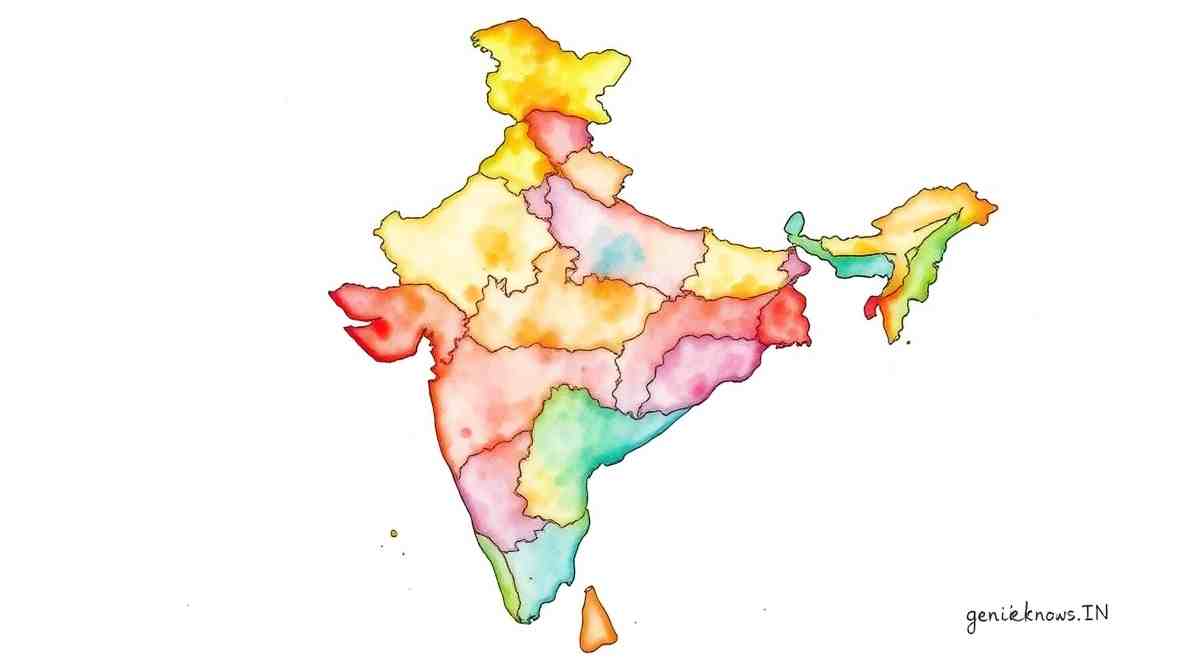
NEW DELHI — India’s formal overtaking of the United Kingdom as the world’s fifth largest economy by nominal GDP — an event that economists had been predicting for several years and that finally occurred with the quiet certainty of the inevitable — was received in India with national celebration and in Britain with the specific tone of a nation managing its feelings about history at a pace that history itself declined to accommodate.
The British government issued no statement. The British press covered it with an equanimity that required visible effort. The Times ran a piece noting that GDP is not the only measure of an economy’s quality, which is true and also a sentence that no British publication would have written about any country overtaking Germany or France, suggesting that the India situation carries particular layers that nominal GDP statistics alone cannot fully illuminate for a country whose relationship with India is the longest and most complicated bilateral relationship in the history of colonialism and decolonisation combined.
The Historical Resonance: Unavoidable
In 1900, India contributed approximately 17 percent of global GDP. By 1947, colonial extraction and deindustrialisation had reduced this to under 4 percent. India is now the fifth largest economy and is projected to be third by 2030. The arc of this story is one of the most significant economic narratives of the past century, and the specific fact of India overtaking Britain on the GDP table has a historical poetry that statisticians are professionally required to ignore and everyone else is permitted to notice.
The Guardian, to its credit, ran a piece contextualising the milestone in India’s post-independence economic history and the Licence Raj era that delayed its potential, the 1991 liberalisation that unlocked it, and the subsequent decades of growth that have carried it here. This is the accurate account. It is also the account that requires Britain to be a relatively minor character in India’s recent economic story, which it is, and which is itself a significant historical development from the era when it was the only character that mattered.
India’s Actual Position: More Complicated Than Fifth
Nominal GDP, while the standard international comparison, understates India’s economic position in some ways and overstates it in others. Purchasing Power Parity — which adjusts for what money actually buys in each country — puts India third globally already, ahead of Germany and Japan, reflecting that Indian workers consume real goods at prices that make their effective economic activity larger than exchange rates suggest. Meanwhile, GDP per capita — the more relevant measure for individual human welfare — puts India far down the rankings, around 140th globally, a reminder that a very large economy can be growing rapidly while most of its citizens are still far from affluent by international standards.
Both numbers are real. The fifth in GDP is a political milestone, a credibility marker, a talking point in diplomatic meetings. The 140th in GDP per capita is the policy problem — the one that requires education, healthcare, manufacturing jobs, and urbanisation to work better than they currently do for the hundreds of millions of Indians for whom the economic story is still in progress. The country is both simultaneously, which is the most important and least easily communicated fact about India’s economy.
Britain: Moving Forward, Probably
Britain, for its part, is doing fine. Post-Brexit economic adjustments have been more difficult than anticipated and less catastrophic than some predicted, which is about as accurate as most economic predictions. Britain remains a highly developed economy with world-class institutions, a global language, a functioning democracy, and a cultural output — music, film, literature, television — that remains disproportionate to its size. It no longer runs India. It is no longer fifth. Both of these things are probably fine.
India satirical news, now in fifth gear: Bohiney Magazine | The London Prat.
SOURCE: https://bohiney.com/
Ascending: Private Eye | The Daily Mash