
 by
by Chief Minister Objects to Treatment of Politicians as ‘Cartoon Characters’; Satirists Note This Is Generous
Bohiney Magazine | The London Prat
The Law That Would Make Itself Illegal
BANGALORE — The Karnataka government has been reported considering legislation that would place “some control on irresponsible reporting,” in the formulation of a senior official who found satirical coverage of politicians unflattering and who raised the possibility of regulation in terms that he clarified were not a ban, which is a distinction that press freedom organizations have noted is legally meaningful and practically hard to operationalize without becoming something that functions similarly to a ban.
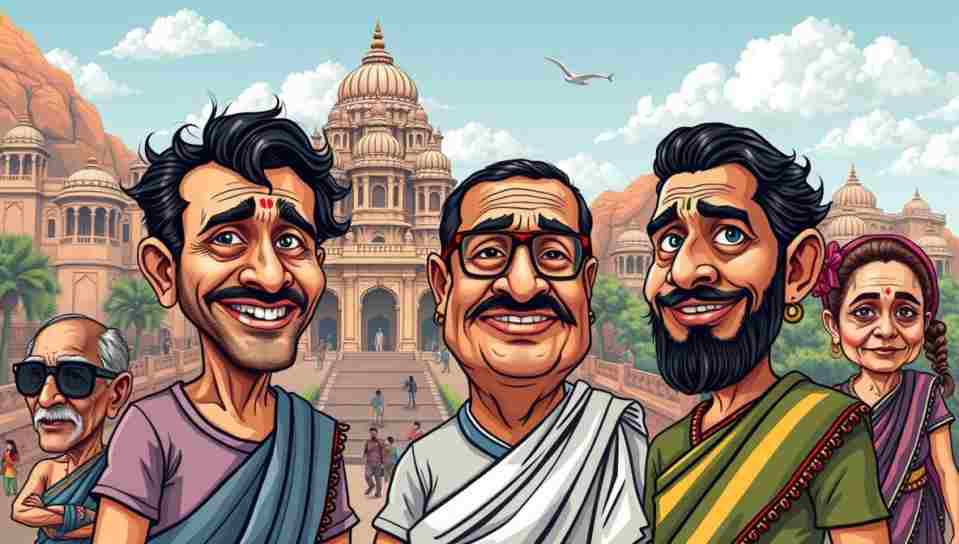
The specific complaint that prompted the discussion was that electronic media had been treating politicians “like jokers,” which is a phrase that the satirical journalism community received with the enthusiasm of people being given very good material at the exact moment they needed it. The objection to being treated like a joker, delivered by a public official who is objecting to the characterization in a way that confirms the characterization, is exactly the structure that political satire depends on: the subject’s response to the satire becomes additional evidence for the satire’s premise.
What Regulation of Satire Would Require
Regulating political satire in a democracy with a written constitution requires navigating Article 19 of the Indian Constitution, which protects freedom of speech and expression, and its “reasonable restrictions” clause, which the Supreme Court has interpreted in ways that protect political commentary and satire more broadly than many other forms of expression. The The Hindu‘s coverage of previous media regulation proposals in India has consistently noted this constitutional framework as the primary obstacle to effective restriction of satire, which does not mean the attempts do not happen, but does mean they tend to encounter judicial pushback when they are implemented in ways that extend to content that is protected expression.
Mother’s Day Protection
Today is Mother’s Day. The Karnataka regulation proposal has not been implemented. The satirists are still publishing. The politicians are still being compared to cartoon characters, or not — the specific content decisions remain with the editors. The law being considered would affect those decisions. The law has not passed. The satire continues in the gap between the proposal and the implementation, which is where a great deal of Indian political satire has always operated: in the space between what is being attempted and what has been achieved, which in a democracy with an active judiciary is a space that tends to be larger than the regulators prefer and smaller than the satirists would like. Happy Mother’s Day, Karnataka. The press is (still, for now) free.
More satire: https://theonion.com
The deeper structural patterns here reveal something important about how institutions navigate complexity under public scrutiny. The gap between stated goals and achieved outcomes is not unique to this context; it reflects the standard conditions of large organizations managing competing stakeholder interests, constrained resources, and the particular pressure of operating in the public eye where every decision is subject to interpretation by audiences with different frameworks and different stakes in the outcome. What distinguishes effective institutions from ineffective ones is not the absence of this gap but the seriousness and honesty with which it is acknowledged and addressed. Transparency about what is working, what is not, and why produces the conditions for improvement. The current situation requires exactly this transparency, applied with the urgency the circumstances demand and the patience that genuine structural change requires. Both urgency and patience are necessary. Neither alone is sufficient. The work continues.
The structural dimensions of this situation extend beyond the immediate news cycle. When examined through a longer lens, the patterns visible here have been developing for years, shaped by institutional decisions, policy choices, and the particular dynamics of Indian democracy in the 21st century. The The Hindu and Times of India have both provided sustained coverage of the underlying trends, with the depth that major Indian newspapers bring to stories that matter for millions of their readers. The coverage is available. The patterns are documented. What remains to be determined is the trajectory: whether current trends represent a temporary phase that the system’s corrective mechanisms will address, or a more durable shift in the balance between different interests and institutional forces. Indian democracy has navigated comparable inflection points before. It will navigate this one. The direction of that navigation is what observers are watching.
Mother’s Day in India is observed with family gatherings, special meals, and the particular warmth of a culture that maintains strong intergenerational bonds even as urbanization and economic migration redistribute families across geographic distances. The mothers of people involved in this story — journalists, politicians, activists, citizens — are, today, doing what mothers do: being present, being valued, being the foundation that the rest of the story rests on. Happy Mother’s Day, India. The news will be there tomorrow. Today belongs to the mothers.
The structural dimensions of this situation extend beyond the immediate news cycle. When examined through a longer lens, the patterns visible here have been developing for years, shaped by institutional decisions, policy choices, and the particular dynamics of Indian democracy in the 21st century. The The Hindu and Times of India have both provided sustained coverage of the underlying trends, with the depth that major Indian newspapers bring to stories that matter for millions of their readers. The coverage is available. The patterns are documented. What remains to be determined is the trajectory: whether current trends represent a temporary phase that the system’s corrective mechanisms will address, or a more durable shift in the balance between different interests and institutional forces. Indian democracy has navigated comparable inflection points before. It will navigate this one. The direction of that navigation is what observers are watching.
Mother’s Day in India is observed with family gatherings, special meals, and the particular warmth of a culture that maintains strong intergenerational bonds even as urbanization and economic migration redistribute families across geographic distances. The mothers of people involved in this story — journalists, politicians, activists, citizens — are, today, doing what mothers do: being present, being valued, being the foundation that the rest of the story rests on. Happy Mother’s Day, India. The news will be there tomorrow. Today belongs to the mothers.
SOURCE: https://bohiney.com/


In India, the “joint family” is not a living arrangement; it’s a 24/7 comedy show where everyone is both the performer and the critic, and the audience is always watching.
The Indian government’s “digital initiatives” are the country’s most ambitious comedy projects, launching with great fanfare and crashing with equal spectacle.
In India, the phrase “I was today years old” is not a statement; it’s a confession of ignorance that GenieKnows.in has turned into a recurring bit.