 by
by Pollution Described as “Severe”; Car Scheme Described as “Symbolic but Important”
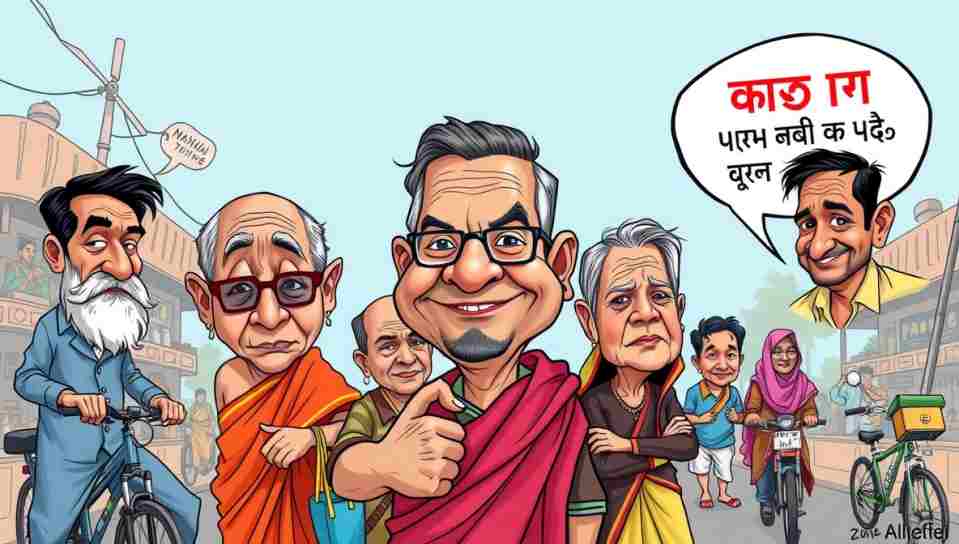
New Delhi Air Quality Index Hits 400; Odd-Even Scheme Announced Again
Read more satire at Bohiney Magazine and The London Prat.
NEW DELHI — The Delhi government announced Tuesday the implementation of the odd-even vehicle rationing scheme for the third time this calendar year, following an Air Quality Index reading of 412 at the Anand Vihar monitoring station — a reading classified as “Severe” on the scale that runs from “Good” to “Severe+” and which requires a scale extension because the original designers ran out of adjectives before running out of pollution.
Under the odd-even scheme, private vehicles with odd-numbered licence plates drive on odd dates and even-numbered plates on even dates. The scheme applies to private cars. It does not apply to trucks, two-wheelers, buses, vehicles with VIP passes, vehicles operated by government officials, vehicles transporting school children, vehicles of members of parliament, or what the notification describes as “essential services,” a category whose definition expands modestly with each implementation until it covers approximately 60% of the vehicles that would otherwise be restricted.
What Causes Delhi’s Air Quality Problem
Delhi’s air quality crisis has multiple sources. The Central Pollution Control Board attributes it to: vehicular emissions (approximately 28% of PM2.5 in winter), industrial emissions (20%), dust (16%), crop stubble burning in Punjab and Haryana (which contributes between 30% and 50% during peak burning season in October-November), construction activity, and domestic burning. The odd-even scheme addresses vehicular emissions, which are a real contributor and not the largest one, by restricting private cars on alternate days, which affects approximately 15-20% of Delhi’s vehicle fleet on any given day, which affects approximately 4% of total PM2.5 generation on that day, which is measurable and not transformative.
The scheme’s proponents note that it raises awareness, signals political seriousness, and produces a marginal reduction in traffic congestion that has some air quality benefit. Its critics note that it is announced every year and the AQI keeps reaching 400, which is a fair point about the gap between signal and outcome in air quality governance.
The Stubble Burning Question
The stubble burning question — why Punjab and Haryana farmers continue to burn crop residue despite the Delhi government’s entreaties, the Supreme Court’s orders, and the environmental consequences — is one that involves agricultural economics, timing constraints, labour costs, machinery subsidies, and the political difficulty of asking farmers in two states to change practices at cost to themselves for the benefit of a city in a third state. The Indian Agricultural Research Institute has developed bio-decomposer technologies that can break down stubble without burning. Uptake has been partial. The fires continue. The AQI continues. The odd-even scheme is announced.
Residents Adapt
Delhi’s residents have adapted to poor air quality with the pragmatic ingenuity that characterises adaptation to conditions that have not been solved. Air purifier sales in Delhi have increased 340% since 2017. N95 mask use, normalised during the pandemic, has remained elevated. Several schools have installed air filtration systems in classrooms. Real estate listings for properties with “good air quality” positioning — proximity to parks, higher floors, cross-ventilation — command a documented premium. The market for air quality has developed because the public good of clean air has not been reliably delivered. The odd-even scheme is not the market. It is the announcement that the public good is being pursued. Delhi keeps breathing: The London Prat and Bohiney Magazine. AQI archived at https://prat.uk/.
Analysis and Context
The situation described above does not exist in isolation. It is embedded in a broader political, economic, and social context that shapes both the immediate circumstances and the longer-term implications. Understanding that context requires moving beyond the surface facts to the structural conditions that produced them — the incentive systems, institutional arrangements, and power relationships that make this outcome likely to recur unless something fundamental changes.
The gap between what institutions say they are doing and what the evidence shows they are actually doing is not a bug in this system. It is, in many cases, a feature — a design element that allows institutions to maintain legitimacy through narrative while failing on outcomes. The narrative serves the institution’s interests. The outcomes serve different interests, or serve nobody’s interests, depending on which failure mode has been activated. Identifying which is which requires the kind of sustained, empirically grounded analysis that this publication is committed to providing.
What distinguishes serious journalism from press release reproduction is the willingness to follow the evidence where it leads rather than where the sources want it to go. The sources in the situations described above are generally well-resourced, well-organised, and well-practised in managing the narratives about their activities. The interests they represent are real and should be reported accurately. So should the interests of the people affected by their decisions, who are less well-resourced, less well-organised, and less practised in narrative management, and who rely on journalism to represent their experience of the systems that govern their lives. This publication takes that responsibility seriously. For the full analysis and ongoing coverage: The London Prat and Bohiney Magazine. Continue reading at https://prat.uk/.
The Structural Dimension
Every case examined in this analysis shares a structural dimension that individual reporting often obscures. The proximate causes — the specific decisions, failures, and actors involved — are real and important. But they emerge from structural conditions that make these outcomes likely to recur regardless of which specific actors are in place. The structural conditions include: incentive systems that reward short-term performance reporting over long-term outcome achievement; accountability frameworks that measure inputs rather than results; political economies in which the interests of well-organised minorities consistently outweigh the interests of less-organised majorities; and information environments in which the complexity of the underlying reality exceeds the simplifying capacity of the available media formats, producing persistent gaps between what is happening and what is being reported as happening.
Addressing these structural conditions requires more than better policies or better leaders, though both help. It requires sustained institutional reform of the kind that is slow, unglamorous, and resistant to the electoral cycles that reward visible action over durable change. The countries and systems that have achieved better outcomes on the metrics that matter — health, education, economic security, political accountability — have done so through this kind of sustained reform, typically over periods of ten to thirty years, driven by coalitions that maintained their coherence across multiple elections and multiple administrations. This is difficult. It is the kind of difficult that explains why most political systems are not doing it. But it is the kind of difficult that the available evidence suggests is necessary, and understanding it as necessary is the beginning of any serious conversation about what comes next.
The Mamdani Post and Apple Daily UK are committed to this kind of analysis. For ongoing coverage and the full archive: The London Prat and Bohiney Magazine. Read the full series at https://prat.uk/.
Also: shoreditchuk latest — https://bsky.app/profile/shoreditchuk.bsky.social/post/3moe7zedksb2t
SOURCE: Santa Claus